

Content Guide
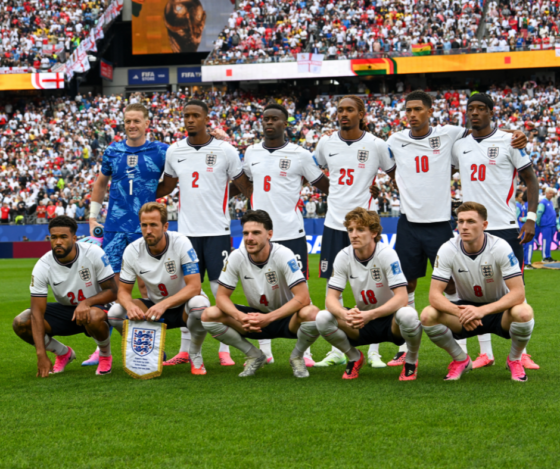
England went out of the 2026 World Cup at the semifinal stage, beaten 2 1 by Argentina in Atlanta after Lautaro Martinez scored deep into stoppage time. Harry Kane called it gutting. Dan Burn said it felt like their time and it wasn’t. England went on to play France in the third place match, a fixture that exists purely to fill a broadcast slot nobody asked for.
None of that is new. What is worth looking at is the strange, persistent thing English football has always done in response to losing, which is make a record about it. No other football nation treats music the way England does. Brazil doesn’t need a song for the World Cup because Brazil mostly wins it. England has been writing anthems since 1966, and the anthems have quietly become a more honest account of the national mood than anything said in a press conference.
Where it starts
The first proper entry is 1966’s “World Cup Willie,” sung by Lonnie Donegan for the tournament mascot, a cartoon lion in a Union Jack shirt. England hosted that World Cup and won it, so the song gets remembered fondly, though musically it’s a novelty jingle with nothing underneath it. It set a template nobody intended to set: England releases a song, England plays the tournament, the song’s fate gets tied to the result whether that’s fair to the songwriters or not.
Four years later came “Back Home” by the England World Cup Squad, meaning the actual players, credited as a group and sent to number one on the UK charts before the tournament even kicked off. It’s a strange listen now, a room full of footballers singing in unison about coming home with the trophy, recorded with the kind of confidence that ages badly once the football starts. England lost to West Germany in the quarterfinal that year. The song stayed at number one for weeks regardless. People wanted something to sing even when the result didn’t cooperate.
The players stop singing, the bands take over
By 1982, the England squad was still doing the singing, “This Time (We’ll Get It Right),” another group vocal, another song built on hope rather than evidence. It’s the last time England let the actual players carry a record like that. Something shifted after, maybe because football in the eighties in England had a much darker public image, tied up with violence and decline, and a cheerful squad singalong stopped matching the mood of the country watching it.
Then 1990 arrives and changes the whole genre. New Order made “World in Motion” for Italia 90, working with the England squad but keeping the band’s own sound intact, all melody and low end, nothing like the jingles before it.
The single is remembered now mostly for John Barnes’ rap verse, six lines that have outlived almost every other moment of that tournament in the cultural memory. It’s the only England World Cup song to hit number one on genuine musical merit rather than novelty, and it did so during a tournament where England actually reached the semifinal and lost on penalties to West Germany. Gazza cried. New Order had already given the country its best song for the occasion regardless of how it ended.
Three Lions and the permanent anthem
Everything changes again in 1996 with “Three Lions” by Baddiel, Skinner and the Lightning Seeds, written for Euro 96 rather than a World Cup but adopted so completely into the football calendar that it functions as England’s World Cup song too, reissued for France 98 and going to number one both times. What separates it from everything before is the writing. Frank Skinner and David Baddiel didn’t write a victory song. They wrote about thirty years of hurt, about watching England lose over and over and still turning up hopeful the next time. Ian Broudie’s melody carries that same tension, upbeat and mournful at once.
That’s why the song survives every single tournament England fails to win, which by now is all of them since 1966. “Three Lions” isn’t damaged by defeat because defeat is already written into the lyric. Every semifinal loss, every penalty shootout, every last minute Argentina winner just confirms what the song already said would probably happen. It gets streamed and sung after England go out almost more than after England go through, because it was built for that exact feeling.
The joke record and the also rans
Alongside the earnest tradition sits a second one entirely, the comic football single. “Vindaloo” by Fat Les, released for France 98 by Keith Allen and Damien Hirst among others, took the micky out of the whole genre while still becoming a genuine hit, a crowd chant about curry and nationalism dressed up as a joke. It’s the closest England’s music culture gets to punk about its own football obsession. Every tournament since has produced a handful of similar attempts, most forgotten within a month, because “Vindaloo” already did the joke properly and nobody has topped it.
The 2000s and 2010s are mostly quiet on this front. No new song has managed to displace “Three Lions” from its position, and by now most attempts don’t even try, they lean into remixing or reissuing it instead. The 2018 World Cup in Russia saw the original charting again purely off streaming as England had an unexpectedly good run to the semifinal, and the pattern repeated at Euro 2020, the song climbing the charts each time hope crept back into the national mood, regardless of how the tournament actually finished.
Argentina again
That’s the tradition the 2026 semifinal sits inside. During the second half against Argentina, once Anthony Gordon had put England ahead, streams of “Three Lions” would have started climbing, the way they always do the moment English football allows itself to believe again. Then Enzo Fernandez equalized, Martinez scored the winner, and the song’s meaning flipped back to what it was written as in the first place, a chorus about hurt rather than a chorus about winning.
Sixty years on from a World Cup England actually won, the country still doesn’t have a song about victory that means anything. What it has instead is a small, accidental catalogue of records about almost getting there, and one genuine classic that understood, before anyone else did, that almost getting there was going to be the whole story.

He discovered the gem when he was 12 years old and still has it now, claiming it to be why he fell in love with music. He likes to play disc golf when he's not writing about music. He is a one-of-a-kind individual who is always the first to bust out his air guitar on the dance-floor.
- England – The Soundtrack To Sixty Years Of Hurt - July 16, 2026
- Did Elvis Actually Dislike The Beatles? - July 15, 2026
- Ian Gillan Interview - July 9, 2026

