
Content Guide
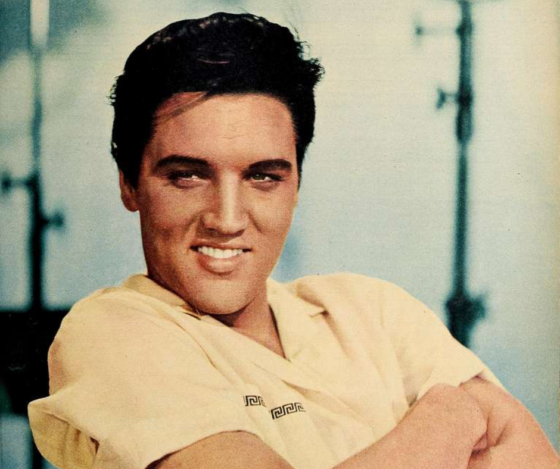
On the night of August 27, 1965, John Lennon stood in a rented mansion on Perugia Way in Bel Air, too nervous to say much of anything. Across the room sat none other than Elvis Presley (The King of Rock N Roll), the man who had rewired his brain as a teenager in Liverpool. For over a year, both camps had tried to arrange this meeting. Now that it was actually happening, nobody quite knew what to do with it.
Elvis broke the silence first. “If you guys are going to look at me all night, I’m going to bed,” he reportedly said, and the ice cracked just enough for the evening to become a strange, low key hangout rather than a summit. He had a remote control switcher, a novelty none of them had seen before, and he kept flipping channels with the sound off while Charlie Rich’s “Mohair Sam” played on repeat.
What happened after that depends entirely on who you ask. Memphis Mafia members Marty Lacker and Alan Fortas both swore there was a genuine jam session, with Elvis picking up a bass and fumbling through McCartney’s part on “I Feel Fine” well enough that Paul joked he was “coming along quite promising on the bass.” But Jerry Schilling, often considered the most level headed of Elvis’s inner circle, denied it flatly. Even the Beatles themselves couldn’t agree decades later in the Anthology interviews. Priscilla Presley, who was in the room, remembered something closer to tension than joy: Elvis, she said, viewed the wave of British music “with tremendous interest and, I suppose, some trepidation.”
That word, trepidation, gets at something real. By the time the Beatles walked into that house, Elvis wasn’t just meeting four young musicians he admired. He was meeting the band that had quietly taken his crown.
A King Dethroned By The Charts
The chart numbers from 1964 tell their own story without needing much interpretation. On April 4 of that year, the Beatles held the top five spots on the Billboard Hot 100 at once, with seven more of their songs charting below that for a total of twelve entries, a record that broke Elvis’s own previous mark of eleven. Not even one Elvis single from that year cracked the year end Top 100. He was busy shooting his third or fourth forgettable movie of the year, the kind of film he privately called a travelogue, while a band from Liverpool rewrote the rules of American pop music without him.
Biographer Alanna Nash, who has written extensively about Elvis and Colonel Parker, put it plainly: Elvis “never really understood the Sixties” and “felt threatened by the Beatles, since they were having huge hits at a time he wasn’t.” That reading lines up with what several people close to him have said over the years. Billy Smith, his cousin, recalled that “Elvis felt threatened by The Beatles but tried to hide it,” and that nobody in the Memphis Mafia dared bring the band up in his presence.
The Respect Underneath The Resentment
This is where the story stops being simple. The same people who described Elvis as rattled by the Beatles also described genuine respect underneath it. Smith remembered Elvis playing a Beatles record and saying, “This is what I’m looking for right here. I want that drive back.” He liked “Yesterday.” He liked “Hey Jude” enough to cover it onstage. His stepbrother David Stanley has said Elvis considered George Harrison the best songwriter of the group. Later in his career, Elvis worked versions of “Something,” “Get Back” and “Lady Madonna” into his live sets, which is not something a man does out of contempt.
There’s also a quote that gets repeated constantly in articles about this feud, the one where Elvis supposedly snapped, “Hell, I don’t want to meet those sons of bitches!” It shows up everywhere, but tracing it back leads mostly to a 2009 Goldmine piece that hedges its own sourcing, framing it as something attributed to Elvis rather than something confirmed. No one has ever pinned it to a named witness in the room. It might be true. It might just be the kind of line that sounds true enough to survive.
The Oval Office Turn
If the 1965 meeting shows a man who was uneasy but still fundamentally warm toward the band, the winter of 1970 shows something colder and far better documented.
On December 21 of that year, Elvis walked into the Oval Office wanting a federal narcotics badge from President Nixon. What he said during that meeting isn’t hearsay filtered through a memoir written decades later. It’s written down in a memo by White House aide Egil Krogh, now sitting in the National Archives. According to that memo, Elvis told Nixon the Beatles “had been a real force for anti-American spirit,” adding that they made their money in the United States and then went home to England to push an anti-American message. Nixon, apparently unfamiliar with who the Beatles even were, just nodded along.
Ten days later, Elvis showed up at FBI headquarters hoping to meet J. Edgar Hoover, who turned him down. He met with agents instead, and one of them, M. A. Jones, wrote a memo dated December 31, 1970 that later surfaced publicly. In it, Elvis is recorded telling the bureau that the Beatles had “laid the groundwork for many of the problems we are having with young people by their filthy unkempt appearances and suggestive music” during their early years touring America.
He also took shots at the Smothers Brothers and Jane Fonda in the same breath, and called Hoover “the greatest living American.” The bureau staff, notably, weren’t impressed by him either. The same memo goes on to describe Elvis’s own shoulder length hair and flashy clothing with a kind of quiet disdain, essentially concluding he wasn’t the type of person Hoover would want to sit down with.
By this point the Beatles had already broken up, months earlier, so Elvis’s comments read less like a reaction to something current and more like an old resentment finding a new outlet. Whether he was genuinely worried about the counterculture or simply telling Nixon what would get him his badge is something historians still debate, but the words exist on paper either way, and they land very differently than a half remembered jam session from five years earlier.
How The Beatles Took The News
When those transcripts eventually became public, the hurt on the Beatles’ side was obvious. Paul McCartney addressed it directly in the Anthology, saying he’d seen the transcripts where Elvis “actually starts to try to shop us,” and admitted, “I felt a bit betrayed by that, I must say.” He softened it almost immediately, though, joking about the irony of Elvis worrying over drugs given how his own life ended, and closing with, “I still love him, particularly in his early period.” Ringo Starr’s reaction carried more sadness than anger: “years and years later, we found out that he tried to have us banished from America… That’s very sad to me, that he felt so threatened.”
What makes all of this so hard to sum up neatly is that the Beatles’ love for Elvis never wavered, even after learning what he’d told the government about them. Lennon’s line that “before Elvis, there was nothing” has been quoted so often it’s practically scripture at this point, and he meant it. McCartney kept a double bass once played by Bill Black, one of Elvis’s earliest sidemen, as what he called his own link to “Heartbreak Hotel.” He later visited Graceland and left a guitar pick on the grave, saying it was so Elvis could play in heaven.
So Did He Actually Dislike Them
The honest answer sits somewhere between insecurity and ideology. In 1965 he was a man watching his own audience shift toward four Englishmen who idolized him, and that unease came out as distance rather than warmth. By 1970, with his career in a strange place and his politics hardening into something close to law and order conservatism, that unease turned into something closer to genuine hostility, one aimed less at the band as musicians and more at what they’d come to represent culturally, especially through Lennon.
None of that erases the fact that Elvis kept singing their songs long after that Oval Office meeting. People rarely hate something they cover onstage for years. What seems most true is that Elvis never stopped respecting what the Beatles could do musically, even while resenting what they’d taken from him and fearing what they stood for politically. Those two feelings lived in the same man at the same time, which is a very human contradiction, even for someone as mythologized as Elvis Presley.

He discovered the gem when he was 12 years old and still has it now, claiming it to be why he fell in love with music. He likes to play disc golf when he's not writing about music. He is a one-of-a-kind individual who is always the first to bust out his air guitar on the dance-floor.
- Did Elvis Actually Dislike The Beatles? - July 15, 2026
- Ian Gillan Interview - July 9, 2026
- Famous British Singer Dies Aged 36 - July 7, 2026

