
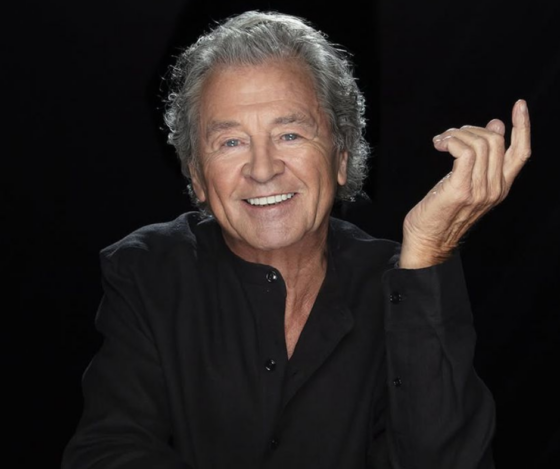
Ian Gillan has spent more than sixty years fronting one of rock’s loudest and most enduring bands, but this autumn he’s swapping the mic stand for a chair and a microphone of a different kind. His new spoken word tour strips away the band, the lights and the volume, leaving just Gillan and a room full of people waiting to hear the stories behind the songs. Ahead of the tour, and with Deep Purple’s new album Splat also landing in July, we caught up with him to talk about Episode Six, Dusty Springfield, that unforgettable Jesus Christ Superstar session, and the people who shaped him along the way.
Hello, Ian. You’ve spent over six decades on stage as a singer, but this tour puts you in front of an audience just talking. What made now the right time to try something so different?
Well, it came out of the blue. It was a big surprise to me when my manager presented me with the offer of this fantastic tour, and I’m really very excited.
It’s all new, as they say, and I’m having to learn how to tell these stories to people other than my friends over a glass of wine, in a theatre. It’s all part of it – the stage setting, our crew – and I’m being taught a few tricks on how to tell the stories without stumbling.
So, yes, it’s all new. It’s not a question of the time being right; it’s simply a question of the stars having aligned, I think.
The press release mentions your time with Episode Six and touring with Dusty Springfield before Deep Purple even existed. Looking back, how much of who you became as a performer was already there in those early years?
Hard to say, really. I grew up in a musical household, so there was music all over the place – opera and jazz with my family – and I was a boy soprano in the church choir.
So, when I heard ‘Heartbreak Hotel’, my whole world changed, and I moved into what was happening at the time, which was basically American rock and pop: Elvis Presley, Little Richard, Chuck Berry, all that sort of thing.
Then, after a couple of years of being semi-professional, I joined Episode Six, and one of the early tours we did was with Dusty Springfield. I was amazed at the professionalism involved. It was a whole new world – a whole machine trundling around the country, with everyone playing their part, being on time, and all the discipline and professionalism, which impressed me no end.
Plus, there was Dusty, sitting there assiduously handwriting replies to fans’ letters and signing pictures all afternoon in her little dressing room. I thought, ‘Wow, there’s more to this than meets the eye.’
So, I don’t really know where it all started, but probably in a hedge somewhere in November 1944.
Playing Jesus Christ on the original Jesus Christ Superstar recording must have been a strange experience early in your career. Is that a story you think people will be surprised to hear more about during the tour?
Well, there’s not much to tell, really. It was a fantastic experience when I got the call from Tim Rice to go and see him and Andrew at their flat in Fulham. Tim gave me the lyrics for ‘Gethsemane’, and Andrew played the part on the piano. Tim said he’d like me to do it a bit like I sang in Deep Purple, with improvisation, and Andrew looked over his shoulder and said, ‘Yes, but not too much, eh?’
So we went in and did the whole session – the whole album track – in three hours, and I was so impressed with the recordings they already had for the backing track from Joe Cocker’s Grease Band and the orchestra they had already put down.
The music was probably no stranger to me because I’d grown up with theatrical music and that sort of thing. The melody was brilliant, the lyrics were fantastic, and they just flowed, as they should do when they’re in the hands of masters like Tim and Andrew. It was a great experience, completely out of the blue.
But then again, we were doing things like the ‘Concerto for Group and Orchestra’ at the time – Jon Lord’s concerto – which was another diversion from the rock and roll route. We didn’t really have any confines. Musical genres hadn’t really developed as they have now. If you’re defined as heavy metal, I suppose you’ve got to stick to heavy metal, but we never had such restrictions.
We had a really open canvas, and with such a diversity of influences among the members of Deep Purple – from orchestral composition to big band swing, folk music, session playing and rock and roll – it was no wonder that my life was full of texture and musical dynamics.
With Splat coming out in July and this tour following close behind, how are you balancing looking forward with the band against looking back at your own life for these shows?
Well, I think, really, life is one big blob, isn’t it? Everything you do is part of it. Even your breakfast is part of, you know, the whole picture. You may think that doing a concert every night – 80, 90, or whatever number of shows we’ve done with Deep Purple – is the important thing, but breakfast is just as important as those hundred minutes on stage.
So we treasure every moment and make the most of it. This is something different, but then again, conversation is also a big part of life. If you treasure these experiences, you realise that when you were younger you didn’t have them, because nothing had happened yet.
I remember being asked to do an interview for the Middlesex Chronicle when we won a cup with The Javelins – a rock competition, or Battle of the Bands, or whatever it was called – and the journalist asked me for an anecdote. I hadn’t got any, because I hadn’t lived. Nothing had happened yet.
Now, of course, there are plenty.
Lastly, Ian. You’ve worked with so many musicians over the decades. Is there someone whose influence on you still surprises you when you think about it now?
It’s hard to pick out individuals because there have been so many, but I’ve got to say probably Ritchie Blackmore, Luciano Pavarotti, Jon Lord, Ian Paice and Roger Glover. Those five people represented sensational moments in my life when I first met them.
The first rehearsal with Deep Purple was a catalytic moment in my life, when all the work, practice, training, dedication, rehearsal, experimentation, travel, hardship and hunger had suddenly come together in a magical moment, with the right human chemistry.
You could have changed one person in that Deep Purple line-up in 1969 and it probably wouldn’t have worked, but that’s the nature of human chemistry. As someone said in a big book once, it’s beyond all understanding.
Pavarotti, of course, was a universe all of his own.
The Ian Gillan UK tour will begin in April 2027 and continue throughout May. Tickets go on sale Friday, 26 June at 10 am, available from BookingsDirect.com and the venues. Information and further announcements will be available via the gillan.com website.

He discovered the gem when he was 12 years old and still has it now, claiming it to be why he fell in love with music. He likes to play disc golf when he's not writing about music. He is a one-of-a-kind individual who is always the first to bust out his air guitar on the dance-floor.
- Ian Gillan Interview - July 9, 2026
- Famous British Singer Dies Aged 36 - July 7, 2026
- Hoobastank “How Do You Sleep?” Review - June 24, 2026

