
Content Guide
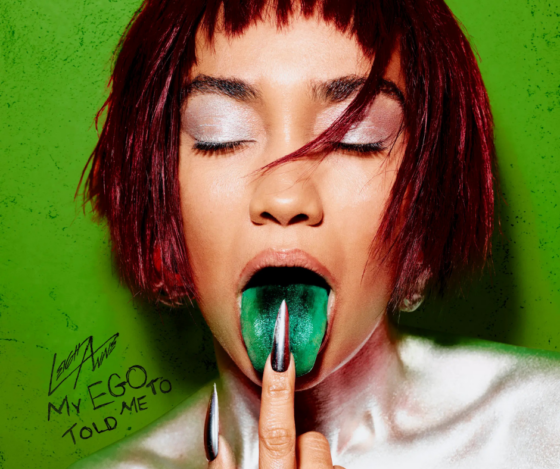
My Ego Told Me To Review: There is a specific kind of debut album that arrives carrying weight most records never have to carry. Not the weight of expectation from fans or critics, though that is there too, but the weight of years. Of things unsaid. Of rooms where someone kept getting talked over and eventually stopped talking. My Ego Told Me To is that kind of album. And from the moment you look at the title, you already understand what it cost to make it.
Leigh-Anne Pinnock spent over a decade as one quarter of one of the most successful British girl groups of all time. Six Top Ten UK albums with Little Mix. Stadiums, Brits, tours that sold out in minutes. And yet she has spoken openly about feeling like the least visible member of the group, about being told by Beyoncé’s choreographer Frank Gatson Jr. that she would have to work five times harder than the other girls because of her race. She has spoken about how that eroded something in her over the years. And she has spoken, with remarkable honesty, about how going independent and making this album on her own terms was the thing that brought it back.
She left her major label deal in May 2025 after the label reportedly ghosted her team and told them they did not have the budget to release her album. She is self funding this record through her own imprint, MADEINTHE90S LTD, distributed through Virgin Music Group. She told Paloma Faith on her podcast that the experience was “quite brutal.” She told NME at Reading Festival: “I’m doing everything myself. It has to be this way.” And she has put her own money into music videos, creative direction, studio sessions, and every other cost that a major label would normally absorb. The stakes of this record, for her personally, are enormous.
All of that context matters because it lives inside the music. You can hear it. And what you hear is someone who stopped asking for permission and started making decisions, and discovered that the decisions she makes on her own are the most interesting ones she has ever made.
The Sounds That Built Her (My Ego Told Me To Review)
Before getting into the singles and the tracklist, it is worth pausing on what Leigh-Anne is actually doing sonically on this record, because it is more specific and more rooted than anything the words “pop album” suggest.
She was born in High Wycombe to Jamaican and Barbadian parents. Her family would travel to Jamaica every year. She grew up with her Jamaican cousin burning her CDs of lovers rock. She started writing this album at a camp in Kingston. This is not a pop artist reaching for Caribbean sounds because they are trending. This is a woman returning to her first musical language after spending a decade working in someone else’s.
The album sits at the intersection of reggae, lovers rock, dancehall, Afrobeats, and R&B, with a pop sensibility that makes it accessible without ever diluting what it actually is. There are moments on this record that sound like nothing any of her ex-bandmates have made, not because she is being competitive, but because her heritage sounds genuinely different from theirs, and she is finally letting it take up the space it deserves.
She has described the record as “versatile, rooted in reggae and my heritage, but stamped with pop. It’s personal and impossible to box in.” And she has delivered exactly that.
The Producer Room Tells You Everything (My Ego Told Me To Review)
One of the strongest signals about the quality of My Ego Told Me To comes from who made it with her.
Clarence “Coffee” Jr. is a three time Grammy winning songwriter and producer. He co wrote nine tracks on Dua Lipa’s Future Nostalgia, including “Levitating.” He contributed to Beyoncé’s Renaissance. He built the pop architecture on Leigh-Anne’s most striking single to date, “Dead and Gone,” and his fingerprints on that track explain exactly why it lands so hard. Every element is purposeful. Nothing is wasted.
Owen Cutts is a North West London producer whose credits span Stormzy, Greentea Peng, and Kojey Radical. He describes his approach as fundamentally rooted in soul music regardless of genre, saying he can “switch from hip hop to folk, to me it’s all the same.” That fluency is exactly what an album like this needs. Someone who can serve the reggae and the R&B and the pop without any of them feeling like they were bolted on from outside.
Khris Riddick brings serious R&B depth. He co produced SZA’s “Snooze,” which won the 2024 Grammy for Best R&B Song. He has worked extensively with Kehlani. His grandmother was a Motown songwriter in the 1960s. His godfather is seven time Grammy winning engineer Neal Pogue. The man was raised on melody and emotional songwriting, and that sensibility is exactly what balances the Caribbean and dancehall elements of the record with genuine emotional weight.
Fred Ball, the Norwegian producer behind Rihanna’s “Love on the Brain,” brings retro soul warmth. He also produced tracks on The Carters’ Everything Is Love. His involvement suggests that some of the album’s less promotional tracks will lean into vintage, doo wop inflected R&B territory, which would be a gorgeous contrast to the harder dancehall cuts.
And then there is Rvssian, the Jamaican producer and founder of Head Concussion Records, whose signature hard hitting basslines and intricate Caribbean rhythms run through at least two album tracks. His presence ensures the dancehall on this record is not borrowed or approximated. It is the real thing, filtered through a pop sensibility but never diluted.
This is not a production team assembled by a label A&R department. It is a wishlist from someone who knows exactly what she wants and had the freedom to go and get it.
The Singles, Tracked (My Ego Told Me To Review)
Five singles were released in the lead up to the album, and together they build a remarkably complete picture of what the full record sounds like.
“Been A Minute” arrived in July 2025 as the opening statement of the independent era, and it set the tone perfectly. It samples Masters at Work’s 2001 track “Work” (itself built on Denise Belfon’s vocal), threading the hook through a warm, rhythm forward production by Elijah “GYW Eli” Ross and Lasse “Loud x Two” Qvist. The beat sits in the crossover zone between dancehall and Afrobeats. Leigh-Anne’s vocal sits inside the groove rather than on top of it, which is a conscious and smart choice. She is not belting over the production. She is in conversation with it, playful and light, and the result is a song that lands in your hips before your brain has even registered it.
She has talked about the sample feeling personal, about how she would play the original with friends growing up. You can hear that authentic connection. This does not feel like a calculated sample designed to generate Shazam hits. It feels like someone revisiting a favourite song and making it their own.
“Burning Up” followed in August 2025 and raised the temperature considerably. Written at a songwriting camp in New York with a large room of collaborators, produced by GYW Eli alongside Yonatan Watts (who has worked with Ariana Grande) and Khaled Rohaim (who has worked with Rihanna), the track layers pounding drums with distorted, textured vocal processing. Leigh-Anne has said she “played with her voice in ways I never have before, with different textures, phrasing, pushing my range,” and you can genuinely hear it. There are moments where her vocal bends in unexpected directions, pulling away from the clean pop delivery she refined over a decade in Little Mix and into something rougher and more alive.
The NME called it “euphoric,” and that word fits. But underneath the euphoria there is something charged and emotional that the word “euphoric” does not quite capture. It is not just a good time track. It is a statement of presence.
“Dead and Gone” is the most important single of the campaign, and possibly the most important thing she has released as a solo artist. Co produced by Coffee Jr., Owen Cutts, and Zhone, it sits at around 85 BPM in G minor, which gives it a patient, deliberate gravity that the earlier singles do not have. The bass is deep. The production breathes and threatens. And over it, Leigh-Anne delivers a vocal performance of real restraint and real power.
The writing is striking: “There’s a fire in the sky burning holes through an innocent soul, and the smoke goes black.” This is a song about the deliberate killing off of the version of herself that played nice, stayed quiet, and hid her fire. “The funny thing is, you’re only someone when somebody kills you, a murder scene, leave her dead and gone.” That line is genuinely brilliant. It is both metaphorical and personally specific. It captures something real about visibility, about how women, and particularly Black women, in the pop industry are often only celebrated once they have broken rather than while they are quietly carrying everything.
She announced the track on social media with: “Before we begin… a moment of silence for who I used to be.” Not a promo line. A statement.
The accompanying visualiser introduced the album’s central concept: two versions of Leigh-Anne appearing on screen. One in green, representing her softer and more vulnerable side. One in blazing red with glowing eyes, embodying raw force and unapologetic energy. This dual identity runs through the entire campaign and across both album covers.
“Most Wanted” featuring Valiant and Rvssian landed in January 2026 as the most purely fun thing she released in the campaign. Springy basslines, glossy dancehall bounce, Rvssian and Dinay Beats handling production duties. Valiant brings unfiltered Jamaican dancehall energy alongside Leigh-Anne’s silky, controlled delivery. The track is body positive, confident, and completely at ease with itself. “You love it when I arch my back, put your hands on my waist, good body, got the most wanted.” She posted on Instagram alongside the release: “Reminding you I’m not the regular type of pop girl.” She is not.
“Friends” featuring Rvssian, a standalone single released in November 2025, operates at a slightly looser frequency than the album singles, and that is partly what makes it interesting. Built on the iconic Gogo Riddim with songwriting from Theron Thomas (a Grammy winning writer who has worked with Beyoncé, Rihanna, and Doja Cat), it is a dancehall pop track about cutting off fake people. She has said Rvssian played her the demo and she fell in love with it immediately, which tells you something about how she is working now. Following instinct rather than strategy.
The Alter Ego Is the Album’s Heart (My Ego Told Me To Review)
Every genuinely great debut album needs a central idea that holds it together beyond just a collection of songs. For My Ego Told Me To, that idea is the alter ego.
In an interview with Defined Magazine, Leigh-Anne described it with real clarity: “When I say alter ego, she is just another side of me. Her colour is red, she is the fire. She is basically my younger self, because that was me before I got into this industry, that side of me that always stood up for herself. I think that was suppressed a little as the years went on, and I needed to revive her.”
The dual album covers literalise this. The standard cover is bathed in green. The alternative cover blazes red. She described the red version as “done being told to wait my turn. She’s the energy that pushed me to take control of my art, my story, my whole era.” And the title itself refers directly to this alter ego giving her the push to take the leap into independence. “If it wasn’t for her, I don’t think I would be in this place now, which is probably the happiest I’ve been in my solo journey.”
There is a lyric on the album where she sings about “living my dream in a nightmare,” which she has described as capturing everything toxic about the industry. The whole album is the story of burning that nightmare down and building something better in its place.
Reading the Tracklist (My Ego Told Me To Review)
The full 15-track standard edition tells a story through its sequencing.
The album opens with “Look Into My Eyes,” which sounds like exactly the confrontational, unflinching statement of intent you would expect. Track two is “Dead and Gone,” which is a fascinating placement. Most artists would hold that kind of gut punch for the back half. Putting it second says: the good stuff is already happening. You are not going to need to wait for it.
“Revival” at track three is the named rebirth that follows the killing. The sequence of destruction then renewal across the first three tracks is a deliberate narrative arc rather than a random order.
“Been A Minute” arriving at track four recasts how you hear it. After the weight of those first three songs, its warmth and swagger become something of an exhale. A moment to breathe before the next section begins.
“Goodbye Goodmorning” is one of the unreleased titles I find most intriguing. The push and pull in that title, the end of something and the start of something else occupying the same phrase, suggests writing that is exploring transition rather than resolution.
“Burning Up” at track six, then “Most Wanted” at seven, form the record’s most euphoric and physical stretch. You can already imagine the live run from one to the other.
“Best Version of Me” and “Me Minus U” in the second half point toward self affirmation and relational reckoning respectively. The interlude, “You ARE a Star,” sitting just past the midpoint, sounds like a pep talk to herself in the middle of a long emotional journey. Then “Tight Up Skirt” and “Talk To Me Nice” in the closing stretch suggest two different sides of her personality landing back to back. One playful and physically confident, the other demanding respect.
“Heaven” and “Friends” round out the standard edition, and you can feel the album landing somewhere warm after all the fire it moved through to get there.
The deluxe edition adds two tracks. “Ego Suicide” is perhaps the most intriguing title on the entire project. If the album is about the ego as a protective and liberating force, killing it entirely implies a vulnerability beyond anything the singles have shown. And “Dead and Gone Part 2” featuring Kojey Radical is genuinely exciting. Kojey is a Mercury Prize nominated, genre bending East London artist whose work in spoken word, grime, and alternative rap has made him one of the most respected voices in UK music.
He has previously worked with Owen Cutts, who produced the original “Dead and Gone,” creating a natural creative connection. His own thematic focus on race, identity, and the African diaspora makes him a near perfect collaborator for the album’s most politically charged moment.
Where This Fits (My Ego Told Me To Review)
All three remaining Little Mix members have now released debut albums, and the contrast between them is genuinely illuminating.
Jade Thirlwall’s That’s Showbiz, Baby was maximalist, camp, electroclash inflected pop that referenced everyone from Madonna to Cascada. Critics loved it. NME gave it four out of five. It worked because Jade’s personality is so outsized that it fills every production choice. She is the student of pop, the one who understands the genre’s mechanics and enjoys playing with its history.
Perrie Edwards’ self titled debut was polished, accessible, and vocally impressive, showcasing the strongest pure voice in the group. But multiple reviewers noted that while individual songs hit hard, the album sometimes felt like a collection of well made pop songs rather than a truly cohesive statement from a specific person.
Leigh-Anne has done the thing neither of them quite pursued as aggressively: she has built a completely distinctive cultural identity into the actual music. You could not mistake a track from this album for a Jade track or a Perrie track. The reggae and dancehall and lovers rock that runs through My Ego Told Me To is not a stylistic choice. It is inherited. Her Caribbean heritage is not decoration here. It is the foundation everything else is built on.
There is something genuinely moving about the fact that the member who was most consistently overlooked, who felt invisible, who was told she would have to work five times harder because of her race, has made the most personally rooted and identifiable debut of the three. Jade made the cleverest album. Perrie made the most radio ready. Leigh-Anne made the one that could only have been made by her. No one else could have made My Ego Told Me To. That is not a small thing.
What to Make of All of It (My Ego Told Me To Review)
The production is consistently excellent without ever feeling overproduced. The writing goes to places that are personal enough to feel real but universal enough to connect with anyone who has ever felt overlooked, underestimated, or pressured to make themselves smaller. The sequencing is emotionally intelligent. The range between the euphoria of “Most Wanted” and the quiet devastation of “Dead and Gone” shows genuine dynamic range across the record.
The album also respects your time. At around 39 minutes across 15 tracks, it is a focused, tight listen that does not overstay its welcome. In an era when albums are routinely padded to game streaming algorithms, that kind of restraint is a statement in itself.
She told Rolling Stone UK that these are “songs I’ll be proud of in five, ten years, because they reflect exactly where I was.” That confidence is not misplaced. The woman who was ghosted by her own label, who funded this record herself, who described the day she created the alter ego in the studio as the moment everything changed, has made an album that sounds exactly like what freedom sounds like when you have been waiting for it for a very long time.
Her ego told her to make this record. You are very glad it did.
Listen To “My Ego Told Me To” By Leigh-Anne (My Ego Told Me To Review)
You can listen here.

- My Ego Told Me To Review – Leigh-Anne – Album Review - February 11, 2026
- New York Review | Marmozets | Single Review | 4/5 - February 5, 2026
- How Did Bad Bunny Get So Popular? - February 4, 2026

