
Guide
How Did Bad Bunny Get So Popular?
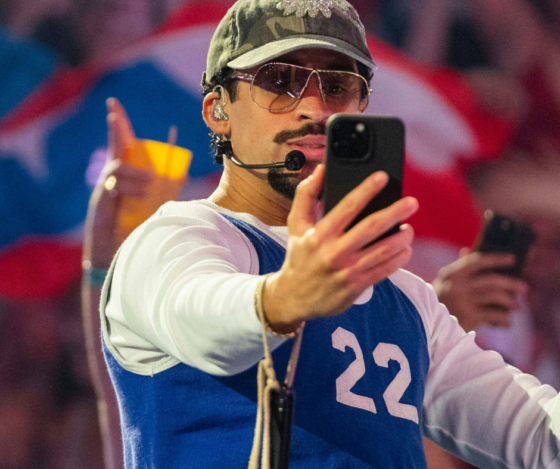
Benito Antonio Martínez Ocasio didn’t become the most streamed artist on Spotify by compromising his identity, he did it by refusing to. The Puerto Rican artist known as Bad Bunny has achieved what music industry executives once deemed impossible: global superstardom while singing exclusively in Spanish, wearing nail polish and skirts in a genre defined by machismo, and making music as if “only Puerto Ricans were going to listen.” His February 2026 Grammy win for Album of the Year the first ever for a Spanish-language album, marked not just a personal triumph but a seismic shift in how the music industry values non-English artistry.
The 31-year-old’s journey from bagging groceries at an Econo supermarket in Vega Baja to selling out stadiums worldwide represents the most remarkable rise in modern Latin music history. With four Billboard 200 #1 albums, six Grammy Awards, and $508 million in career touring revenue, Bad Bunny has fundamentally rewritten the rules of crossover success.
A church choir boy who discovered trap in his bedroom (How Did Bad Bunny Get So Popular?)
Born March 10, 1994, in Bayamón and raised in the Almirante Sur barrio of Vega Baja a small town approximately 30 miles west of San Juan, Benito grew up in a lower middle-class household. His father Tito worked as a truck driver; his mother Lysaurie was a schoolteacher. He sang in the Catholic church choir until age 13 and served as an altar boy, his earliest musical influences shaped by the salsa and merengue his parents played at home.
His stage name emerged from childhood humiliation. Forced to wear a bunny costume for a school Easter activity, young Benito posed for photos with an angry scowl. Years later, when searching for a memorable brand, he translated “El Conejo Malo” (The Bad Bunny) to English, recognizing the cognitive dissonance would stick: “There’s no bad bunnies, even a bad bunny’s gonna look like a good bunny,” he later explained. “It fit perfect because I could be bad, I could be good.”
While attending the University of Puerto Rico at Arecibo for audiovisual communications, Benito worked part-time as a bagger and cashier at an Econo supermarket to fund his education. But by 2013, he had created a SoundCloud account and begun uploading songs, crafting tracks in his bedroom after shifts. It was there, on January 25, 2016, that he uploaded “Diles”, a decision that would alter Latin music’s trajectory.
The SoundCloud upload that launched an empire (How Did Bad Bunny Get So Popular?)
Producer DJ Luian discovered “Diles” on SoundCloud while Benito was still scanning groceries. Sensing something distinctive in the young artist’s idiosyncratic timbre and unusual aesthetic, DJ Luian signed him to Hear This Music in July 2016 as the label’s first-ever artist. The “Diles” remix, featuring Ozuna, Farruko, Arcángel, and Ñengo Flow, dropped in August 2016 and has since accumulated over 1 billion YouTube views.
But it was “Soy Peor” in December 2016 that established Bad Bunny as Latin trap’s brightest new voice. The post-breakup anthem peaked at #19 on Hot Latin Songs and achieved 11× Platinum Latin certification, its music video surpassing 650 million YouTube views. “I wasn’t the kid who got involved in the streets,” Bad Bunny told Rolling Stone. “I liked to be at home with my family.” That authenticity vulnerability wrapped in trap beats resonated deeply.
Throughout 2017, Bad Bunny placed an astonishing 15 songs on the Hot Latin Songs chart. His collaboration with Becky G, “Mayores,” marked his first Billboard Hot 100 entry at #74, while its music video exceeded 2.5 billion views. By November 2017, he was hosting Beats 1’s first Spanish-language radio show, “Trap Kingz.” The supermarket employee had become an industry force in under two years.
Crossover without compromise shaped his breakthrough (How Did Bad Bunny Get So Popular?)
The 2018 breakthrough came in a way that would define Bad Bunny’s entire career philosophy: massive American success achieved on his own terms. “I Like It,” his collaboration with Cardi B and J Balvin sampling Pete Rodriguez’s 1967 boogaloo classic “I Like It Like That,” reached #1 on the Billboard Hot 100 in July 2018. It was Bad Bunny’s first chart-topper and the first Latin trap song to reach #1 on Billboard’s Dance/Mix Show Airplay chart. The accompanying video has been viewed over 1.6 billion times.
That October, Drake came calling. “Mía” saw the Canadian superstar sing entirely in Spanish for the first time, with Bad Bunny’s team guiding his pronunciation during studio sessions. The song peaked at #5 on the Hot 100, Bad Bunny’s first top 10 as a lead artist, and surpassed 1.3 billion YouTube streams. “We spoke about everything,” Bad Bunny recalled. “I don’t speak English well, but after a few drinks you can speak any language.”
His Christmas Eve 2018 debut album X 100PRE earned a Latin Grammy for Best Urban Music Album and peaked at #11 on the Billboard 200, certifying Latin Diamond. The following year brought OASIS, an 8-song collaborative EP with J Balvin that reached #9 on the Billboard 200 and earned a Grammy nomination. But Bad Bunny was just warming up.
Spanish-only albums rewrote Billboard history (How Did Bad Bunny Get So Popular?)
The COVID-19 pandemic couldn’t stop Bad Bunny’s momentum. YHLQMDLG, released February 29, 2020, became the highest-charting all-Spanish-language album in Billboard 200 history at the time, peaking at #2 and spending a remarkable 70 weeks at #1 on Top Latin Albums, the longest reign since that chart began in 1993. Its first-week Spotify streams totaled 296 million. The album won him his first Grammy in 2021 for Best Latin Pop or Urban Album.
Just nine months later, El Último Tour Del Mundo achieved what many thought impossible: it debuted at #1 on the Billboard 200, becoming the first all-Spanish-language album to ever top that chart. The lead single “Dakiti” with Jhay Cortez reached #5 on the Hot 100 and became the first song to simultaneously top both the Billboard Global 200 and Global Excl. U.S. charts, holding #1 on Hot Latin Songs for 27 weeks.
Then came Un Verano Sin Ti in May 2022, which didn’t just break records, it shattered industry assumptions. The album spent 13 non-consecutive weeks at #1 on the Billboard 200, becoming the first Latin album to finish as the year-end #1 album. It holds the distinction as the most-streamed album of all time on Spotify with over 18.6 billion streams. Six tracks from the album each exceeded one billion streams. The album earned a historic nomination: first Spanish-language album nominated for Grammy Album of the Year.
The 2023 release Nadie Sabe Lo Que Va a Pasar Mañana debuted at #1, placing all 21 eligible songs on the Hot 100 simultaneously, with 10 reaching the top 40. His January 2025 album DeBÍ TiRAR MáS FOToS completed his transformation from hitmaker to history-maker, becoming the first Spanish-language album to win the Grammy for Album of the Year at the February 2026 ceremony.
From nail polish to Met Gala co-chair, his style challenged machismo (How Did Bad Bunny Get So Popular?)
Bad Bunny’s cultural impact extends far beyond streaming numbers. In a reggaeton genre historically defined by hypermasculinity, he emerged as what academics call “a leading figure in the move to push alternative masculinities, queer visibility, and decolonial perspectives into the mainstream.”
His fashion choices became political statements. After the February 2020 murder of Alexa Negrón Luciano, a transgender woman in Puerto Rico, Bad Bunny appeared on The Tonight Show wearing a T-shirt reading “Mataron a Alexa, no a un hombre con falda” (“They killed Alexa, not a man in a skirt”). His “Yo Perreo Sola” music video featured him in full drag wig, red leather minidress, thigh-high boots, spotlighting gender-based violence. At the 2022 VMAs, he kissed a male backup dancer during his performance.
“I feel like men should be able to do nail art without feeling feminine,” he told Vogue about his signature manicures, which have featured neon green, hot pink, and Prada-inspired designs. His 2023 Met Gala appearance, a custom backless white Jacquemus suit with a 20-foot floral camellia train earned universal acclaim. By 2024, he was co-chairing the Met Gala alongside Jennifer Lopez, Zendaya, and Chris Hemsworth.
GLAAD presented him with its Vanguard Award in 2023 for LGBTQ+ allyship, with Ricky Martin calling him “an icon for the Latin queer community.” Bad Bunny has stated he views his own sexuality as fluid.
Authenticity as strategy became his winning formula (How Did Bad Bunny Get So Popular?)
When asked why he never recorded in English despite his massive American audience, Bad Bunny has been characteristically direct. “I am very proud to reach the level in which we are speaking Spanish, and not only in Spanish, but in the Spanish that we speak in Puerto Rico,” he told El País. “Without changing the accent. You have to break that thing about the gringos being gods.”
He deliberately uses heavy Puerto Rican slang that even native Spanish speakers from other countries struggle to understand. “I make songs as if only Puerto Ricans were going to listen to them,” he has said. Harvard Professor Alejandro L. Madrid observed: “It’s striking that he insists on singing in Spanish and using Puerto Rican slang that many people in Latin America don’t know, and it’s even more remarkable that fans all over the world embrace his music.”
His 2025 album DeBÍ TiRAR MáS FOToS pushed this further, collaborating exclusively with Puerto Rican artists and incorporating traditional genres like salsa, bomba, and plena. Yale Professor Albert Sergio Laguna, who teaches a course titled “Bad Bunny: Musical Aesthetics and Politics,” described it as “the most Puerto Rican album he’s ever put out.”
This authenticity-as-strategy opened doors for an entire generation. Where Ricky Martin and Shakira pivoted to English for global success in the 1990s, Bad Bunny proved that era was over. “His success inspired countless Spanish-speaking artists to pursue careers without feeling pressured to switch to English,” noted Fourteen East Magazine. Today, artists like Karol G, J Balvin, and Rauw Alejandro fill American stadiums singing entirely in Spanish doors Bad Bunny helped open.
A touring juggernaut generating half a billion dollars (How Did Bad Bunny Get So Popular?)
Bad Bunny’s live shows transformed him from recording artist to global phenomenon. His 2022 touring operation generated $435 million the highest calendar-year gross in Billboard Boxscore history, surpassing Ed Sheeran’s 2018 record. He became the first artist to mount two separate $100-million tours in the same year, with the World’s Hottest Tour alone grossing $314 million across 43 stadium dates and attracting 1.9 million fans.
The Most Wanted Tour in 2024 added another $211 million from 49 sold-out arena shows, breaking all-time venue records at 16 of 30 locations. His 2025 Puerto Rico residency at San Juan’s Coliseo de Puerto Rico, 31 shows titled “No Me Quiero Ir De Aquí”, generated over $250 million in economic impact for the island, with 500,000+ spectators attending.
His April 2023 Coachella headline set marked another first: the first Spanish-language artist to headline the festival’s main stage. His February 2026 Super Bowl LX halftime performance will be yet another historic milestone, the first solo Spanish-language headliner in Super Bowl history.
From most-streamed artist to Album of the Year winner (How Did Bad Bunny Get So Popular?)
Bad Bunny’s award cabinet chronicles Latin music’s mainstream acceptance. His six Grammy wins include the groundbreaking 2026 Album of the Year for DeBÍ TiRAR MáS FOToS and Best Global Music Performance for “EoO”, the first reggaeton song to win that category. His 17 Latin Grammy Awards include the 2025 Album of the Year, his first win in that category after five nominations.
He claimed Billboard’s Top Latin Artist five consecutive years (2020-2024) and MTV VMA Artist of the Year in 2022, the first non-English-language performer to win that award, beating Drake, Ed Sheeran, Harry Styles, and Lizzo. At the 2025 Billboard Latin Music Awards, he received the inaugural “Top Latin Artist of the 21st Century” award, presented by Rita Moreno.
On Spotify, he stands alone: the only artist to be named most-streamed globally four times (2020, 2021, 2022, 2025), including an unprecedented three consecutive years. His 2025 total reached 19.8 billion streams. He holds the record for most songs to enter the Hot 100 by any primarily non-English language artist, 113 entries, with 12 reaching the top 10.
What his rise means for music’s future (How Did Bad Bunny Get So Popular?)
The New Yorker’s Kelefa Sanneh called Bad Bunny “probably the most important musician in the world right now.” That assessment reflects not just commercial dominance but cultural transformation. By achieving everything the industry told him required English-language concessions, Billboard #1s, Grammys, stadium tours, Super Bowl headlining, while singing exclusively in Spanish and challenging gender norms in Latin music, Bad Bunny proved the old gatekeeping model was broken.
At his Grammy acceptance speech in February 2026, he addressed the broader moment: “We’re not savages, we’re not animals, we’re not aliens. We are humans, and we are Americans.” It was a statement of belonging from an artist who succeeded by refusing to assimilate, who understood that universal appeal doesn’t require abandoning specificity, and that the most Puerto Rican music imaginable could become the world’s most popular.
From that angry child in a bunny costume to the architect of Latin music’s new golden age, Benito Antonio Martínez Ocasio didn’t just become a global superstar. He redefined what that could mean.
Conclusion For How Did Bad Bunny Get So Popular?
Bad Bunny’s trajectory offers a blueprint for authenticity-driven success in an era when algorithms reward distinctiveness over conformity. His refusal to sing in English wasn’t career suicide, it was competitive advantage, creating urgency among non-Spanish-speaking fans to engage with music on the artist’s terms rather than their own. His fashion and gender expression didn’t alienate reggaeton’s core audience, they expanded it, attracting fans who saw themselves reflected in his willingness to challenge norms.
The numbers, $508 million in touring revenue, 18.6 billion streams on a single album, four Billboard 200 #1 albums entirely in Spanish represent more than personal achievement. They represent proof that the music industry’s assumptions about what global audiences would accept were fundamentally wrong. Bad Bunny didn’t just break through barriers. He revealed they were always more permeable than gatekeepers claimed.
Sources
- Harvard Gazette. “How Bad Bunny rocketed to global stardom” https://news.harvard.edu/gazette/story/2026/02/how-bad-bunny-rocketed-to-global-stardom/
- PBS NewsHour. “How Bad Bunny is making history while celebrating Puerto Rican culture on the world stage” https://www.pbs.org/newshour/show/how-bad-bunny-is-making-history-while-celebrating-puerto-rican-culture-on-the-world-stage
- PBS News. “Bad Bunny wins album of the year at the 2026 Grammy Awards” https://www.pbs.org/newshour/arts/bad-bunny-wins-album-of-the-year-at-the-2026-grammy-awards-making-history-for-a-spanish-language-album
- Billboard. “Bad Bunny Biography, Music & News” https://www.billboard.com/artist/bad-bunny/
- Billboard. “Bad Bunny’s History-Making Accomplishments: A Timeline” https://www.billboard.com/lists/bad-bunny-timeline-history-making-accomplishments/
- Billboard. “Bad Bunny Closes Out 2022 With Record-Breaking $435 Million in Tour Grosses” https://www.billboard.com/pro/bad-bunny-2022-concerts-earn-record-breaking-435-million/
- Billboard. “Bad Bunny’s ‘Un Verano Sin Ti’ Hits 13 Weeks at No. 1” https://www.billboard.com/music/chart-beat/bad-bunny-billboard-200-chart-number-one-thirteen-weeks-un-verano-sin-ti-1235153095/
- Billboard. “Bad Bunny Gets Top Latin Artist of the 21st Century Award” https://www.billboard.com/music/latin/bad-bunny-top-latin-artist-21st-century-billboard-awards-1236096940/
- Billboard. “All of Bad Bunny’s Albums, Ranked” https://www.billboard.com/lists/bad-bunny-albums-ranked/
- Rolling Stone. “Bad Bunny Notches Third Consecutive Number One Album” https://www.rollingstone.com/music/music-news/bad-bunny-nadie-sabe-lo-que-va-a-pasar-manana-number-one-1234859868/
- Biography.com. “Bad Bunny Makes Grammys History With Album of the Year Win” https://www.biography.com/musicians/bad-bunny
- Remezcla. “A Timeline of Bad Bunny’s Biggest Career Moments” [https://remezcla.com/lists/music/a-timeline-of-bad-bunnys-biggest-career-moments-from-charts-to-protests-and-more/

- Already There Review | Young the Giant | Single Review | 4/5 - April 16, 2026
- Long Long Road Review – Ringo Starr – Album Review - April 14, 2026
- Biggest Songs For Summer 2026 | What To Expect - April 10, 2026

