
Guide
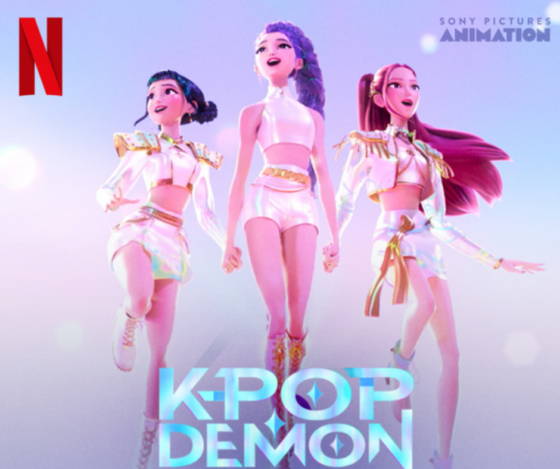
Golden sequel: There are moments in music where something shifts so completely that you find yourself trying to remember what things were like before. The original KPop Demon Hunters was one of those moments. And now, with Netflix confirming a sequel is officially in the works, the conversation is not really about animation or streaming numbers anymore. It is about what comes next for music itself. Because what this film did to global charts, to the way fans interact with songs, to the entire concept of what a film soundtrack can be, was genuinely unlike anything we had seen before. The sequel carries the weight of all of that, and then some.
What “Golden” Actually Did To The Music Industry (Golden Sequel)
Let’s be honest about what happened with “Golden.” It spent twenty weeks at the top of Billboard’s global chart. It sat at number one on the Hot 100 for eight straight weeks. It won a Grammy. It is walking into the Oscars as the frontrunner for Best Original Song. These are not just impressive statistics.
They represent a complete rewriting of the rules for what K-pop, what animated film music, and what non-English language songwriting can do inside the mainstream Western music industry. When EJAE wrote that song after over a decade of training inside the machine at SM Entertainment, she was not writing for a global moment. She was writing for a story. And the global moment found her anyway.
That detail matters enormously for what the sequel needs to do, and perhaps more importantly, for what it does not need to do. There will be enormous pressure to simply recreate “Golden.” To find the next song that feels exactly like that one, give it a similarly sweeping melody, wrap it in that same blend of Korean shamanic history and modern pop gloss, and hope lightning strikes twice. But anyone who actually loves music knows that this approach almost never works. The reason “Golden” hit so hard was precisely because nobody was trying to manufacture a cultural phenomenon. It arrived with sincerity, and the audience felt that in the bones of it.
So the question hanging over this sequel from a purely musical standpoint is this: what do you do when you have already given people everything?
Going Deeper: Trot, Metal and The Sounds Korea Has Been Keeping To Itself (Golden Sequel)
The answer, if you believe what the filmmakers are hinting at, is that you go deeper. Maggie Kang has talked about wanting to explore other Korean musical traditions, specifically trot and heavy metal. For anyone who has spent real time listening to Korean music, this is genuinely exciting. Trot is one of the most emotionally direct forms of music that exists. It has this quality of sitting right in the centre of your chest, built on a foundation of longing that is almost impossible to fake.
It carries a generational weight too, beloved by older Korean listeners in a way that connects across family lines in a way that pure pop rarely does. If the sequel weaves trot into its musical fabric with the same care that the first film brought to its shamanic and contemporary pop blend, it could introduce a form of music to global audiences who have genuinely never encountered it, in the same way the first film made millions of people go and research Korean mudang traditions after watching.
The heavy metal thread is a different kind of interesting. Korean rock and metal scenes are vibrant, deeply committed communities that rarely get acknowledged in the mainstream conversation about what Korean music is. When the rest of the world was busy watching idol groups, a dedicated underground was producing genuinely powerful music rooted in everything from traditional Korean instrumentation to the heavier end of the Western rock spectrum.
Bringing that world into the KPop Demon Hunters universe does something important for the internal logic of the story too. If demons are the antagonists and K-pop is the weapon the hunters use against them, then the sequel expanding its musical arsenal to include trot and metal is not just a creative choice. It becomes a metaphor. Different kinds of power for different kinds of battles.
Showing More Sides Of Korea: Why The Musical Map Matters (Golden Sequel)
EJAE has spoken about wanting to show more sides of Korea through the sequel’s music. This is not a small statement. The first film’s soundtrack gave Western audiences a window into K-pop’s production world, its layered harmonics, its precise emotional architecture, its ability to carry cultural specificity inside pop structures that feel universally accessible.
But Korea’s musical landscape is so much wider and stranger and more interesting than the version of it that has been exported through idol culture. Trot, pansori, samulnori, the incredible diversity of sounds that make up Korean folk and traditional music all represent territories that a film with this level of global reach could map out for people who would never otherwise find their way there.
Music producer Zhun has also spoken about wanting to continue the high energy the first film delivered. This suggests the sequel’s soundtrack will not be a gentle artistic pivot into quieter territory. The bones of what made the first film’s music work so well, the propulsive forward motion of it, the sense that the songs and the action were the same thing rather than one supporting the other, that will likely remain. What changes is the palette. And a wider palette, used with the same level of care and intention that went into the original, could make for a soundtrack that is even more historically significant than “Golden.”
EJAE’s Story Is The Story The Music Industry Needs To Hear (Golden Sequel)
There is also something worth thinking about regarding EJAE herself and what her trajectory means for the broader music industry conversation. Her story is one that resonates with anyone who has followed the K-pop training system with clear eyes. She spent over a decade inside SM Entertainment learning her craft, writing songs that became massive hits for other artists, watching others debut while she waited.
The standard industry narrative would be that this was a story of someone almost succeeding and then falling short. What actually happened is that all of those years of learning, all of that time spent understanding what makes a song land emotionally, produced someone capable of writing a song that would eventually sit alongside the most significant pop achievements in recent memory.
For the sequel, EJAE’s involvement matters not just because of her track record but because of what she represents to a new generation of songwriters who are watching her. The idea that depth of craft, that genuine musical knowledge built over years in relative obscurity, can eventually produce something that connects with hundreds of millions of people is not a message the music industry tells itself very often. But it is a true one. And the sequel gives her another canvas to work on, presumably with even more creative freedom and resources than before.
How The Grammy Win Changed The Critical Conversation Around K-Pop (Golden Sequel)
The broader impact on K-pop as an industry is also hard to overstate. Before KPop Demon Hunters, the Western critical establishment had a complicated relationship with K-pop. It would acknowledge its commercial reach while often treating it as a genre that operated outside the boundaries of what serious music criticism needed to engage with.
The Grammy win for “Golden” changed that calculus in a way that is not reversible. It put K-pop composition squarely inside the conversation about what the most impactful songwriting of this era looks like. The sequel arriving with the full weight of the first film’s legacy behind it, and with filmmakers openly discussing wanting to expand into genres that are even less familiar to Western ears, has the potential to deepen that shift rather than just consolidate it.
The Cover Wave No One Saw Coming (Golden Sequel)
What happened in the wake of “Golden” with the cover wave was also a genuinely unusual phenomenon in modern music. Virtually every major K-pop act recorded their own version of it. Artists from completely different agencies and completely different stylistic worlds, MAMAMOO’s Solar, Stray Kids, BTS’s j-hope, IVE’s Yujin, first generation legend Bada of S.E.S., all found their own way into the song.
This did not happen because they were required to. It happened because the song gave them something to say through it. The sequel’s music being strong enough to generate a similar response from within the K-pop community itself would be an extraordinary thing to witness. And given who is involved and what they are clearly aiming for, it does not feel like an impossible standard to reach.
Redefining What A Film Soundtrack Can Actually Be (Golden Sequel)
There is also the question of what the sequel does for the conversation about animated film soundtracks more broadly. For a long time, the prevailing wisdom was that animated films worked best with original songs that served the story without trying to extend their lives outside the cinema.
The songs were designed to function in context. What “Golden” proved is that a song written for an animated film can have a cultural life completely independent of the film itself, can become something people claim as their own and carry around with them as a personal anthem, without ever losing its connection to the story that produced it. That is a different kind of songwriting challenge. It requires music that works in two registers simultaneously. And the sequel’s creative team now knows they can achieve it.
A Different Door Into Korean Music, And Why That Matters
What all of this adds up to is a genuine moment of possibility. The sequel to KPop Demon Hunters is not simply a follow-up to a successful film. It is a continuation of a conversation that started when audiences around the world discovered that a story rooted deeply in Korean culture, told through music that drew on that culture’s full richness, could speak to something universal inside all of them. The music is where that conversation has always been most alive. And with the filmmakers talking openly about expanding the musical world of the story, bringing in genres that have rarely if ever had this kind of platform, the sequel has the chance to do something genuinely rare.
It could make people fall in love with Korean music all over again, through a completely different door.
That is not nothing. In fact, right now, it feels like everything.

He discovered the gem when he was 12 years old and still has it now, claiming it to be why he fell in love with music. He likes to play disc golf when he's not writing about music. He is a one-of-a-kind individual who is always the first to bust out his air guitar on the dance-floor.
- How Joy Division Rewired Robert Smith’s Blueprint - April 15, 2026
- Your Favorite Toy Review – Foo Fighters – Album Review - April 9, 2026
- Kanye West Banned From UK: What Happened With Wireless and Why He Can’t Perform - April 8, 2026

