
Guide
How K Pop Demon Hunters Took Over The Music World
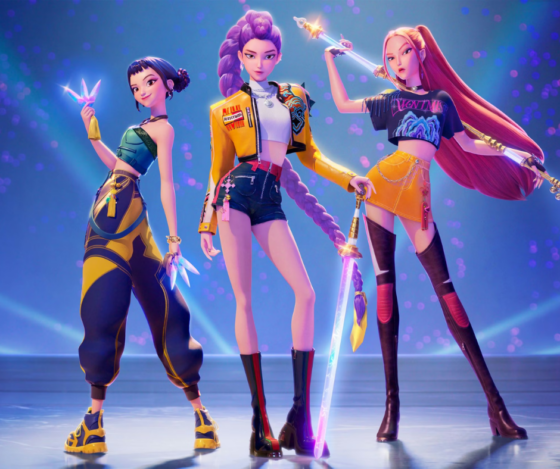
The moment “Golden” hit number one on the Billboard Hot 100 in August 2025, something shifted in the cultural atmosphere. Not because another song topped the charts. Songs do that every week. What made this different was that the voices behind it belonged to characters who only existed in pixels. HUNTR/X, the fictional girl group from Netflix’s K Pop Demon Hunters, had just accomplished what real Korean artists had been fighting toward for over a decade. Three animated demon hunters in gold costumes became the first female K pop act to claim the top spot on America’s most prestigious singles chart.
I still remember scrolling through social media that week and seeing pure disbelief. People who had dismissed animated musicals as kids’ fare were suddenly confronted with streaming numbers that made their heads spin. Over 325 million views in the first month. Four songs in the top ten simultaneously. A cultural tsunami that nobody saw coming but everybody should have.
The perfect storm nobody predicted (How K Pop Demon Hunters Took Over The Music World)
To understand why K Pop Demon Hunters landed with such seismic impact, you need to understand the landscape it arrived into. By summer 2025, K pop found itself in a strange paradox. The genre had become undeniably global. Stray Kids was breaking Beatles records on the Billboard 200. SEVENTEEN packed out stadiums across multiple continents. Streaming numbers for the top 100 K pop acts had grown 42% year over year. Yet something felt stuck.
BTS was completing military service. BLACKPINK had gone relatively quiet. The industry had experienced its first domestic sales decline in a decade. And while the established fandoms kept the machine running, breaking new audiences felt harder than ever. The conversation around K pop in Western media often circled back to the same names, the same narratives, the same talking points.
Then Rosé and Bruno Mars dropped “APT.” in October 2024, and suddenly the walls started crumbling.
How a drinking game became a global anthem (How K Pop Demon Hunters Took Over The Music World)
Before K Pop Demon Hunters even released, “APT.” had already proven something crucial. Korean culture could drive Western pop success, not despite its uniqueness but because of it. The song was built around apateu, a Korean drinking game Rosé taught her collaborators during a late night studio session. Bruno Mars heard the chant and immediately wanted to build something around it.
“It was her saying this hook that just had this magic to it,” Mars later explained. “She really put me on game.”
The result was a stomping pop rock track that debuted at number eight on the Hot 100, eventually climbing to number three. It spent 12 weeks atop the Billboard Global 200. On YouTube, it hit a billion views faster than any K pop video in history, breaking the record “Gangnam Style” had held for over a decade. Rosé became the first female K pop soloist to crack the top ten on the Hot 100, the first to hit number one in Australia since Psy, the first to top the Canadian charts period.
But “APT.” did something beyond setting records. It made Korean language and culture feel like assets rather than barriers. Music critics compared it to “Gangnam Style” for turning everyday Korean elements into viral phenomena. When protesters during South Korea’s martial law crisis in late 2024 adopted it as a rallying song, the track transcended entertainment entirely.
By the time K Pop Demon Hunters arrived the following June, audiences were primed for something more.
Building a universe from scratch (How K Pop Demon Hunters Took Over The Music World)
Director Maggie Kang spent years developing what she called her “love letter to K pop.” The concept drew from Korean shamanism, specifically the historical tradition of female shamans using song and dance in spiritual rituals. She took that foundation and built a mythology around demon hunters who masquerade as pop stars, using their voices to maintain a magical barrier protecting humanity.
The premise could have felt gimmicky. Instead, Kang and co director Chris Appelhans crafted something genuinely affecting. Rumi, the protagonist voiced by Arden Cho with singing duties handled by EJAE, struggles with being half demon while leading a girl group expected to achieve perfection. Her arc explores shame, identity, and generational trauma through a lens that resonated with K pop fans who understood the pressures the industry places on real performers.
The animation itself channeled the kinetic energy of K pop choreography. Fight sequences incorporated taekwondo elements designed by the K Tigers. Fashion drew from Givenchy, Alexander McQueen, and traditional Korean garments. Every frame felt considered, purposeful, alive.
Voice casting brought together established names and emerging talents. Daniel Dae Kim, Ken Jeong, and Lee Byung hun provided gravitas. Ahn Hyo seop, fresh off his Business Proposal fame, gave the antagonist Jinu genuine pathos. The Saja Boys, the demon boy band working against HUNTR/X, needed to feel threatening and appealing simultaneously. The casting threaded that needle.
When “Golden” became gold (How K Pop Demon Hunters Took Over The Music World)
The soundtrack changed everything. Executive music producer Ian Eisendrath assembled a team that read like a K pop hall of fame. Teddy Park, the producer behind BLACKPINK’s biggest hits. Lindgren, who worked on BTS’s “Boy with Luv” and tracks for TWICE and Dua Lipa. Jenna Andrews and Stephen Kirk, the writers behind “Butter” and “Permission to Dance.”
“Golden” emerged as the centerpiece. Written by EJAE alongside Mark Sonnenblick and production team 24 and IDO, the track functions as what musical theater calls an “I Want” song. It introduces the characters’ ambitions while hinting at darker undercurrents. The bridge shifts into a quieter, more haunted register that reflects Rumi’s secret demon heritage.
When the song dropped alongside the film on June 20, 2025, it felt like watching a rocket launch. Within weeks, “Golden” had topped charts in over 30 countries. It achieved a perfect all kill in South Korea, meaning it simultaneously held the number one position on every major streaming and download chart. In the UK, it became the first K pop single to reach number one since “Gangnam Style” in 2012.
What struck me most was how the song played on radio. Usually K pop tracks struggle to break into American airwaves outside of dedicated fan requests. “Golden” felt different. By January 2026, it became the first K pop associated song to top Billboard’s Radio Songs chart. DJs were playing it because people wanted to hear it, not because a fandom organized a calling campaign.
The boys who stole scenes and souls (How K Pop Demon Hunters Took Over The Music World)
If “Golden” carried emotional weight, “Soda Pop” brought pure sugar rush energy. Performed by the Saja Boys, the demon boy band disguised as heartthrobs, the track was designed to be annoyingly infectious. Writers Vince and KUSH crafted something deliberately evocative of BTS’s “Butter” mixed with 90s boy band nostalgia.
The genius lay in the subtext. On the surface, “Soda Pop” sounds like a flirty summer jam about attraction. But the lyrics harbor a darker meaning. When the demons sing about being “sweet, bubbly, and addictive” and wanting to “drink every drop,” they’re describing consuming human souls. The songwriters built a pop confection that works as both earworm and villain statement.
TikTok devoured it. The song generated over 970,000 pieces of content on the platform. J Hope of BTS posted a video with his backup dancers doing the choreography at Lollapalooza. By October, “Soda Pop” had peaked at number three on both the Hot 100 and UK charts. Korea named it song of the summer.
The Saja Boys’ fictional success created real world consequences. Kevin Woo, the former U KISS member who voiced Mystery Saja, saw his Spotify followers explode from 10,000 to 30 million. A decade after his real boy band career, an animated role made him a streaming phenomenon.
Numbers that demand attention (How K Pop Demon Hunters Took Over The Music World)
The scale of K Pop Demon Hunters’ success still feels surreal when you lay it out. It became Netflix’s most watched original title ever with over 500 million views. It reached the global top ten in 93 countries within two weeks and stayed in Netflix’s top ten for 15 consecutive weeks, longer than any English language film in platform history.
When Netflix released a sing along version for limited theatrical screenings, the screenings sold out across 1,300 locations. The film topped the North American box office that weekend, becoming the first Netflix release to achieve that milestone. People who could watch it for free at home were paying to experience it in theaters with other fans.
The soundtrack notched achievements that no animated film had managed since Frozen and Encanto dominated the early 2020s. Four songs in the Hot 100’s top ten at once. Seven songs charting simultaneously. The album itself hit number one on the Billboard 200, the first animated film soundtrack to accomplish that since Encanto in 2022.
Beyond the charts, the cultural ripple effects spread further than anyone anticipated. Seoul saw 1.36 million international tourists in July 2025, the largest monthly tally ever recorded, with much of the increase credited to film related pilgrimages. Stock prices for Korea’s big four entertainment companies surged double digits. YG Entertainment alone rose over 100%.
A love letter that Hollywood received (How K Pop Demon Hunters Took Over The Music World)
Critical reception matched the commercial success. Rotten Tomatoes showed a 94% approval rating from 97 critics. The New York Times called it “charming, funny and artfully punchy” with a universe as original as Spider Verse. Roger Ebert’s site praised it as “emotionally empowering” and “familiar and fresh, kind of like a song you’re hearing for the first time, but you somehow know the words.”
What impressed me most was how the film handled its relationship to real K pop. It clearly came from people who genuinely understood and loved the culture. The references felt earned rather than exploitative. When Bobby, the group’s energetic manager voiced by Ken Jeong, scrolls his phone showing TWICE’s “Strategy,” it lands as an affectionate nod rather than corporate synergy. When the climactic battle incorporates pansori, the traditional Korean storytelling through song, it connects the film’s fantasy to real heritage.
Award season brought validation that even the biggest optimists hadn’t predicted. K Pop Demon Hunters won Best Animated Feature at both the Golden Globes and Critics Choice Awards. “Golden” took Best Original Song at both ceremonies, becoming the first animated film song to win that Globe since Prince’s “Song of the Heart” nearly two decades earlier.
Then came the Grammy nominations. “Golden” earned nods for Song of the Year, Best Pop Duo/Group Performance, Best Song Written for Visual Media, and Best Remixed Recording. EJAE became the first Korean American female songwriter nominated for Song of the Year. Combined with “APT.” earning nominations for Record of the Year and Song of the Year, the 2026 Grammys featured two K pop adjacent tracks in the industry’s most prestigious categories simultaneously.
Real idols in an unreal time (How K Pop Demon Hunters Took Over The Music World)
K Pop Demon Hunters arrived during a turbulent period for the actual K pop industry. NewJeans was embroiled in public disputes with their management. Various artists faced personal scandals. The grueling demands of idol life continued generating stories about burnout and mental health struggles. Against that backdrop, the appeal of perfect, controversy free animated idols became hard to ignore.
Rolling Stone observed: “There are no fan wars. There are no label wars. There’s no artist drama. There’s none of the issues that groups face amongst each other.”
This dynamic sparked genuine debate. Some argued the film advanced K pop appreciation by introducing newcomers to the genre’s appeal without baggage. Others worried it might overshadow real artists struggling for the same attention. The truth probably lies somewhere more complicated. HUNTR/X and the Saja Boys existed in a space that complemented rather than replaced actual performers. TWICE members Jeongyeon, Jihyo, and Chaeyoung contributed “Takedown” to the soundtrack, bringing real idols directly into the animated universe.
What changed and what it means going forward (How K Pop Demon Hunters Took Over The Music World)
The impact of K Pop Demon Hunters extended beyond entertainment metrics. It demonstrated that K pop aesthetics, storytelling, and musical vocabulary had become genuinely global languages. An American studio could create an animated film steeped in Korean culture and have it resonate with audiences who might never have engaged with a real K pop album.
More significantly, it proved that authenticity sells. The film succeeded not by diluting Korean elements for Western palates but by leaning into them. The mythology drew from shamanic traditions. The drinking game from “APT.” became a global meme precisely because it felt genuinely Korean. Director Maggie Kang’s heritage informed every creative decision.
Music critic Lim Jin mo described this as “glocal” success, the fusion of local specificity with global appeal. Rather than stripping away what made K pop distinctive, the film amplified those elements and found an audience hungry for something different.
The bridge keeps building (How K Pop Demon Hunters Took Over The Music World)
As I write this in early 2026, the momentum shows no signs of slowing. A sequel is confirmed for 2029. Netflix has already released a short film called “Debut: A K Pop Demon Hunters Story” expanding the universe. KATSEYE, the multinational girl group formed through HYBE and Geffen’s Dream Academy process, earned a Best New Artist Grammy nomination. BTS has reunited following military service. BLACKPINK launched their DEADLINE world tour.
The infrastructure K pop built over decades finally reached critical mass. K Pop Demon Hunters didn’t create that infrastructure, but it supercharged its expansion. It gave casual observers a gateway drug to the broader genre. It gave longtime fans validation that their passion had finally broken through to mainstream acceptance. It gave the Recording Academy enough undeniable evidence that K pop deserved serious Grammy consideration.
Whether animated idols represent a permanent fixture of the landscape or a singular phenomenon remains to be seen. What feels certain is that the boundaries between Korean pop music and global pop music have blurred beyond recognition. When a fictional girl group can top the Hot 100, win Golden Globes, and drive tourism to Seoul, the old rules no longer apply.
The demon hunters sang about wanting to be “Golden.” They achieved something beyond even that ambition. They made K pop feel inevitable, unstoppable, and very much the sound of right now.
And somewhere, in studios across Seoul and Los Angeles, the next chapter is already being written. The gate is open. The barrier is down. Whatever magic HUNTR/X summoned, it’s spreading everywhere.
Sources For How K Pop Demon Hunters Took Over The Music World
Billboard
- 17 Ways K-Pop Proved More Global Than Ever in 2025
- SEVENTEEN, ATEEZ Tours Lead K-Pop’s Best Midyear Boxscore Total
- The 2025 Billboard K-Pop Artist 100
Wikipedia
Netflix Tudum
- K Pop Demon Hunters Soundtrack & Lyrics, Full Track List
- K Pop Demon Hunters: Grammy Nominations, News, Lore, Trailer, and Merchandise
- K Pop Demon Hunters Sing-Along Streaming on Netflix
Rolling Stone
The Korea Herald
The Hollywood Reporter
Korea.net
ABC News
Industry Reports
- Luminate: Mapping Out K-Pop’s Global Dominance
- Statista: K-pop popularity worldwide 2024
- Reprtoir: Is K-Pop Slowing Down?
Other Sources

- Iceman Review – Drake – Album Review - April 28, 2026
- Jarboe, “SIGHTINGS” – New Music - April 20, 2026
- Sweat Review – Melanie C – Album Review - April 20, 2026

