

Guide
Punk rock did not arrive politely. It kicked in the door of a bloated, self-satisfied music industry in the mid-1970s, screaming that three chords were enough, that anyone could do this, that the emperor had no clothes. Half a century later, it remains the most consequential cultural insurgency in popular music.
Not because of what it sounded like, but because of what it meant. Punk rewired the relationship between artist and audience, demolished the barrier between who makes culture and who consumes it, and seeded virtually every alternative music movement that followed. Its influence stretches from fashion runways to feminist theory, from indie labels to internet culture. This is how it happened, from the filthy stages of Lower Manhattan to the festival headliners of 2026.
Before the Storm: The Proto-Punks Who Lit the Fuse (Punk Rock)
Every revolution has its prophets. Punk’s were a handful of bands too raw, too confrontational, and too ahead of their time for the mainstream to process. In 1967, the Velvet Underground released The Velvet Underground & Nico, an album produced by Andy Warhol that dealt in heroin, sadomasochism, and corrosive feedback while the rest of rock was painting flowers on its face. The famous line about that record says it all: it didn’t sell, but everyone who bought a copy started a band. That remains the most concise description of how influence actually works.
Two years later, from Ann Arbor, Michigan, came twin detonations. The MC5’s Kick Out the Jams opened with the infamous battle cry “Kick out the jams, motherfuckers!” A live album of furious, politically radical rock tied to John Sinclair’s White Panther Party. Down the road, Iggy Pop and the Stooges were conjuring something even more primal. Iggy’s stage presence, which included self-mutilation, audience-diving, and smearing himself with peanut butter, made him the godfather of punk performance. Their 1973 album Raw Power, mixed by David Bowie, barely scraped the Billboard chart but now stands as the definitive proto-punk statement.
In New York, the New York Dolls merged Detroit’s aggression with glam rock’s gender-bending theatricality. Their 1973 self-titled debut, recorded in eight days, was voted both best and worst new group of the year by Creem magazine. The perfect proto-punk paradox. A young London art-school dropout named Malcolm McLaren briefly managed them in 1975, dressing them in red patent leather with hammer-and-sickle imagery. The Dolls imploded, but McLaren took notes.
Meanwhile, in 1972, a record store clerk named Lenny Kaye compiled Nuggets: Original Artyfacts from the First Psychedelic Era, a double LP that resurrected forgotten 1960s garage bands including the Seeds, the Sonics, and the 13th Floor Elevators. Kaye’s liner notes contained one of the earliest known uses of the term “punk rock.” The compilation was a Rosetta Stone, connecting the feral energy of mid-sixties garage to what was about to detonate.
315 Bowery: Where the Outcasts Built a Universe (Punk Rock)
On December 10, 1973, Hilly Kristal opened a grimy club at 315 Bowery in Manhattan’s skid-row East Village. He called it CBGB and OMFUG, short for Country, Bluegrass, Blues and Other Music for Uplifting Gourmandizers. He never got his country acts. What he got instead was the most important incubator in rock history.
Television, led by the wiry, cerebral Tom Verlaine, talked their way onto the nonexistent stage in early 1974 and then physically helped build one. By April, Patti Smith and Lenny Kaye were in the audience, and Kaye called it “a changing-of-the-guard moment.”
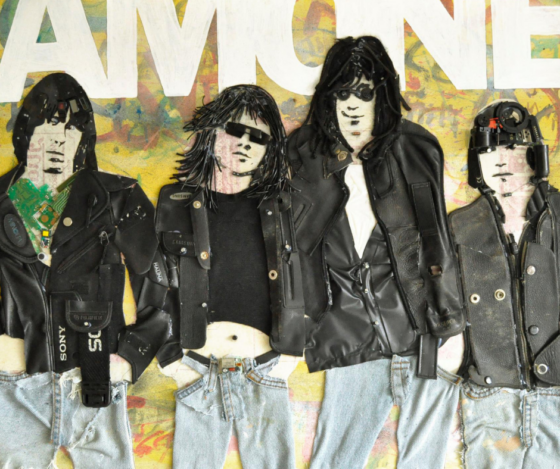
The Ramones followed on August 16, 1974, and played CBGB 74 times before the year was out. Four guys from Forest Hills, Queens, in matching leather jackets and ripped jeans, hammering through songs that rarely exceeded two minutes. Their debut album, Ramones, was recorded in February 1976 for $6,400. Seven days of work yielding 14 tracks in 29 minutes. It was the antithesis of everything rock had become: no solos, no pretension, no mercy. In a world of Emerson, Lake and Palmer and Frampton Comes Alive!, it sounded like year zero.
On November 10, 1975, Patti Smith released Horses, produced by John Cale of the Velvet Underground, its cover shot by Robert Mapplethorpe in a single session of twelve frames. Smith standing in a white shirt, jacket slung over her shoulder, Frank Sinatra-style. The album’s first words, “Jesus died for somebody’s sins but not mine,” announced that poetry and rock ‘n’ roll were no longer separate countries. When the record company wanted to airbrush her messy hair, she stopped them cold.
And then there was Richard Hell. His torn T-shirts held together with safety pins, and his razored, spiky hair became the visual template for an entire movement, one that Hell himself barely participated in. As Malcolm McLaren later admitted with rare candor: “Richard Hell was a definite hundred percent inspiration. I was going to imitate it and transform it into something more English.” One day in 1976, Chris Stein of Blondie flipped through a European rock magazine and told Hell: “There are four guys who look exactly like you!” The photo showed the Sex Pistols.
Legs McNeil, John Holmstrom, and Ged Dunn launched Punk magazine in January 1976, crystallising the word from a critics’ adjective into a full cultural identity. McNeil explained it plainly: “The word ‘punk’ seemed to sum up the thread that connected everything we liked. Drunk, obnoxious, smart but not pretentious, absurd, funny, ironic.”
God Save the Queen: Britain’s Punk Detonation (Punk Rock)
If New York punk was art-school bohemianism choosing primitivism, British punk was working-class fury with nowhere else to go. By 1976, the UK was in crisis. Inflation exceeded 18%, youth unemployment sat above 30% in inner cities, and a Labour government had been forced into a humiliating $3.9 billion IMF bailout. John Lydon remembered it plainly: “Early seventies Britain was a very depressing place. Completely run down, trash on the streets, total unemployment. Just about everybody was on strike.”
Into this walked Malcolm McLaren, armed with Situationist theory, a boutique called SEX on the King’s Road, and a band assembled from shop assistants and school dropouts. In August 1975, his associate Bernie Rhodes spotted a nineteen-year-old named John Lydon wearing a Pink Floyd T-shirt with “I HATE” scrawled above the logo in ballpoint, the members’ eyes scratched out. Lydon auditioned by miming to Alice Cooper’s “I’m Eighteen” on the shop jukebox. Steve Jones nicknamed him Johnny Rotten for his terrible teeth. The Sex Pistols were complete.
What followed was a sequence of detonations that permanently altered British culture. “Anarchy in the U.K.” dropped on November 26, 1976. Five days later, on the Bill Grundy interview, Jones called the host a “dirty fucker” on live television after Grundy drunkenly flirted with Siouxsie Sioux. The Daily Mirror headline screamed THE FILTH AND THE FURY. Overnight, the Pistols went from obscure club band to national threat.
“God Save the Queen” arrived on May 27, 1977, during Silver Jubilee week. The BBC banned it. WHSmith, Boots, and Woolworths refused to stock it. It reached number two on the official chart, but number one on the NME chart, and Virgin Records’ own sales figures exceeded those cited for the number-one single. On the chart display, the number-two slot appeared as a blank line. On June 7, McLaren and Richard Branson rented a boat called the Queen Elizabeth and sailed down the Thames past Parliament while the band blasted “Anarchy” from a makeshift stage. Police boarded. Eleven people were arrested. The stunt cost £750 and generated more publicity than money could buy.
Never Mind the Bollocks, Here’s the Sex Pistols hit number one in October 1977. It was the band’s only studio album. By January 14, 1978, at the Winterland Ballroom in San Francisco, it was over. Rotten leaned into the microphone and sneered: “Ever get the feeling you’ve been cheated?”
But by then, the damage was done. The Clash had already released their self-titled debut, recorded over three weekends, too raw for CBS to release in America, where it became the year’s biggest-selling import. Joe Strummer had quit his pub-rock band the 101ers within 24 hours of seeing the Pistols, later explaining: “Five seconds into their first song, I knew we were like yesterday’s paper.”
The Damned had beaten everyone to the punch with “New Rose” in October 1976, the first UK punk single, and Damned Damned Damned in February 1977, the first UK punk album. The Buzzcocks self-released the Spiral Scratch EP in January 1977, recorded in three hours for £500, proving that you didn’t need a label’s permission to exist.
The famous illustration appeared in the fanzine Sideburns in December 1976. Three chord diagrams with the caption: “This is a chord, this is another, this is a third. Now form a band.” Mark Perry’s Sniffin’ Glue, twelve handwritten, photocopied issues, urged readers to cut their hair, leave their jobs, and start playing. Independent labels multiplied: Stiff, Rough Trade, Factory, New Hormones. The Rock Against Racism carnival on April 30, 1978, drew 100,000 people marching from Trafalgar Square to Victoria Park, where the Clash, X-Ray Spex, and Steel Pulse played to a crowd reclaiming punk from the far-right National Front.
And through it all, Poly Styrene, born Marianne Joan Elliott-Said to a British mother and Somali father, stood at the front of X-Ray Spex. One of the first women of color to lead a British rock band, screaming “Oh Bondage Up Yours!” in Day-Glo clothes and dental braces, deliberately refusing to be a sex symbol. Her anti-consumerist lyrics anticipated concerns that wouldn’t become mainstream for decades.
The Splintering: Post-Punk, Hardcore, and a Thousand Flowers (Punk Rock)
First-wave punk burned fast. What rose from its ashes was stranger, darker, and more varied than anyone predicted.
In Manchester, a handful of people who had attended the Sex Pistols’ legendary Lesser Free Trade Hall gigs, attended by perhaps 40 to 70 people in total, went on to create Joy Division, the Smiths, the Fall, Factory Records, and the entire Manchester music scene. Joy Division’s Unknown Pleasures (1979), produced by Martin Hannett, replaced punk’s fury with mood, space, and crushing melancholy. Ian Curtis died by suicide on May 18, 1980, at 23. John Lydon himself had already moved on, forming Public Image Ltd and releasing Metal Box (1979), a dub-inflected experimental masterpiece. Post-punk was art made by people who had learned from punk that rules were optional.
Across the Atlantic, hardcore took punk’s velocity and made it lethal. In Hermosa Beach, California, Greg Ginn founded Black Flag and SST Records, creating the infrastructure for an entire underground. Henry Rollins, a 20-year-old Häagen-Dazs manager from D.C., jumped onstage at a New York show, auditioned days later, quit his job, sold his car, and moved to Los Angeles. Black Flag’s Damaged (1981) was deemed “anti-parent” by MCA Records, prompting a lawsuit that barred the band from releasing music under their own name for two years. Rollins later documented the band’s grueling touring life in Get in the Van, which won a Grammy.
In Washington, D.C., Ian MacKaye co-founded Dischord Records as a teenager and formed Minor Threat. Their song “Straight Edge,” which advocated no drugs, no alcohol, and no promiscuous sex, accidentally launched a global movement. MacKaye insisted it was “no set of rules.” Bad Brains, an all-Black band who had converted from jazz fusion to hardcore after discovering punk, were so intense they got blacklisted from every D.C. venue. Their song “Banned in D.C.” memorialised it. Their 1982 ROIR cassette, known as the Yellow Tape, fused hardcore with reggae so convincingly that Adam Yauch of the Beastie Boys called it “the best punk/hardcore album of all time.”
In San Francisco, Jello Biafra and the Dead Kennedys turned punk into political satire sharp enough to draw an obscenity trial. In San Pedro, the Minutemen recorded their 45-track double album Double Nickels on the Dime for $1,100. And when MacKaye formed Fugazi in 1987, insisting on $5 shows, no merchandise, and all-ages venues, Joe Strummer himself declared them the band that best embodied the spirit of punk.
Dookie, Smash, and the Year Punk Went Platinum (Punk Rock)
By 1994, punk rock was supposed to be dead. Instead, it sold more records than it ever had.
Green Day’s Dookie, released February 1, 1994, was recorded at Fantasy Studios in Berkeley in 19 days. Producer Rob Cavallo hoped to sell 200,000 copies. By September 2024, it was certified double diamond, 20 million units in the United States alone, one of only thirteen albums ever to reach that mark. The same year, the Offspring’s Smash moved 11 million copies worldwide on Epitaph Records, becoming the best-selling independent label album in history. When Brett Gurewitz heard the finished album, he told his wife: “Everything’s changed. We’re going to be rich.”
The tension was immediate. Berkeley’s 924 Gilman Street, the all-ages DIY venue where Green Day had cut their teeth, banned them the moment they signed to Reprise. Someone scrawled “BILLIE JOE MUST DIE” on the bathroom wall. The ban lasted 20 years. Rancid, offered deals by multiple majors including Madonna’s Maverick Records, turned them all down, recording …And Out Come the Wolves (1995) for Epitaph and earning street credibility that money couldn’t buy. NOFX’s Fat Mike deliberately chose not to send their music video to MTV: “We just didn’t want to be part of that machine.”
The Warped Tour, launched in 1995 by Kevin Lyman, carried punk into suburban America. Boise, Idaho. Wichita, Kansas. Places that rarely saw touring bands. Blink-182’s Enema of the State (1999) sold 15 million copies worldwide, and “All the Small Things” reached number six on the Billboard Hot 100, completing pop-punk’s colonisation of the mainstream.
The 2000s Fracture and the MySpace Revolution (Punk Rock)
The new millennium saw punk splinter into a dozen subgenres at once. AFI evolved from Gilman Street hardcore kids into goth-punk auteurs, with Sing the Sorrow (2003) debuting at number five. Fall Out Boy’s From Under the Cork Tree (2005) and My Chemical Romance’s The Black Parade (2006) fused punk energy with theatrical emo ambition. Paramore’s Hayley Williams, just 18 when Riot! dropped in 2007, became one of the few women headlining the scene.
Against Me!’s Laura Jane Grace pushed punk’s boundaries further than anyone. In 2012, she came out publicly as transgender in Rolling Stone, becoming one of the first major punk musicians to do so. Transgender Dysphoria Blues (2014) addressed her transition with ferocious honesty, the kind of album that recontextualises the entire back catalogue leading up to it.
The Gaslight Anthem’s Brian Fallon, meanwhile, channelled Springsteen and the Clash into The ’59 Sound (2008), earning him an onstage duet with Bruce himself at Glastonbury. Springsteen later praised the album as “simultaneously sparse and epic at the same time.”
Through all of this, MySpace, which by 2006 had surpassed Google as the most-visited website in America, became punk’s new CBGB. A digital venue where bands could reach audiences without gatekeepers. Panic! at the Disco, Fall Out Boy, and Paramore all built massive followings on the platform before traditional media caught up.
Punk in 2026: The Sound of Right Now (Punk Rock)
The old question, “Is punk dead?”, has never sounded more absurd.
In Melbourne, Amy Taylor of Amyl and the Sniffers channels Iggy Pop’s raw physicality into garage-punk that tackles climate anxiety and AI on their 2024 album Cartoon Darkness, recorded at the Foo Fighters’ 606 Studios. In Bristol, IDLES’ Joe Talbot turns grief, toxic masculinity, and immigration into communal catharsis. Joy as an Act of Resistance (2018) was shortlisted for the Mercury Prize, and by 2026 they are scoring Darren Aronofsky films and filling arenas.
Dublin’s Fontaines D.C., raised on Yeats and Joyce, have evolved from post-punk poets with Dogrel (2019) to genre-dissolving experimentalists with Romance (2024), earning Grammy nominations along the way. In Nottingham, Sleaford Mods’ Jason Williamson delivers sprechgesang rants over Andrew Fearn’s minimal electronics, and the late Mark E. Smith called them “about the only good thing.”
And in Baltimore, Turnstile have achieved what seemed impossible: bringing hardcore to Coachella, to the Tonight Show, to Blink-182 stadium tours. Their 2021 album GLOW ON incorporated dream-pop and samba alongside crushing breakdowns, earning three Grammy nominations. Their 2025 follow-up Never Enough features Hayley Williams, punk’s past and present collaborating in real time.
The Chord That Never Stops Ringing (Punk Rock)
Punk’s ultimate legacy isn’t musical. It’s philosophical. The DIY ethic, the idea that anyone can create, distribute, and build community without permission from gatekeepers, fed directly into indie labels, zine culture, Riot Grrrl feminism through Kathleen Hanna’s Bikini Kill and Sleater-Kinney, internet culture, and the democratisation of media itself. Dischord Records’ $8 albums anticipated Bandcamp’s artist-first model by decades. Mark Perry’s hand-stapled Sniffin’ Glue was the ancestor of every blog and Substack that followed.
The tension between punk as anti-commercial rebellion and punk as commodity has never been resolved, and that’s the point. McLaren operated under the motto “Cash from Chaos.” Ramones T-shirts sell for hundreds of dollars at department stores. CBGB is now a designer boutique. The Sex Pistols’ “God Save the Queen” is heritage culture. But this friction is punk’s engine, not its epitaph. Sleaford Mods’ Jason Williamson captures it perfectly, mocking the DIY scene while admitting he still wants to be rated by someone.
Joe Strummer died on December 22, 2002. Joey Ramone died on Easter Sunday 2001. Poly Styrene died in 2011. Malcolm McLaren in 2010. But Strummer’s most famous line endures as punk’s permanent thesis: the future is unwritten. Punk rock is not a genre you grow out of. It is the radical, stubborn, ungovernable belief that ordinary people can change the culture by force of will, three chords, and the truth. Fifty years on, that idea hasn’t aged a day.
Sources For Punk Rock
- Wikipedia: Punk rock — https://en.wikipedia.org/wiki/Punk_rock
- Wikipedia: Ramones — https://en.wikipedia.org/wiki/Ramones
- Wikipedia: Ramones (album) — https://en.wikipedia.org/wiki/Ramones_(album)
- Wikipedia: Sex Pistols — https://en.wikipedia.org/wiki/Sex_Pistols
- Wikipedia: God Save the Queen (Sex Pistols song) — https://en.wikipedia.org/wiki/God_Save_the_Queen_(Sex_Pistols_song)
- Wikipedia: CBGB — https://en.wikipedia.org/wiki/CBGB
- Wikipedia: Horses (album) — https://en.wikipedia.org/wiki/Horses_(album)
- Wikipedia: Dookie — https://en.wikipedia.org/wiki/Dookie
- Wikipedia: Smash (The Offspring album) — https://en.wikipedia.org/wiki/Smash_(The_Offspring_album)
- Wikipedia: …And Out Come the Wolves — https://en.wikipedia.org/wiki/…And_Out_Come_the_Wolves
- Wikipedia: Warped Tour — https://en.wikipedia.org/wiki/Warped_Tour
- Wikipedia: NOFX — https://en.wikipedia.org/wiki/NOFX
- Wikipedia: Fugazi — https://en.wikipedia.org/wiki/Fugazi
- Wikipedia: Black Flag — https://en.wikipedia.org/wiki/Black_Flag_(band)
- Wikipedia: Henry Rollins — https://en.wikipedia.org/wiki/Henry_Rollins
- Wikipedia: Bad Brains — https://en.wikipedia.org/wiki/Bad_Brains
- Wikipedia: Straight edge — https://en.wikipedia.org/wiki/Straight_edge
- Wikipedia: Poly Styrene — https://en.wikipedia.org/wiki/Poly_Styrene
- Wikipedia: X-Ray Spex — https://en.wikipedia.org/wiki/X-Ray_Spex
- Wikipedia: Oh Bondage Up Yours! — https://en.wikipedia.org/wiki/Oh_Bondage_Up_Yours!
- Wikipedia: Rock Against Racism — https://en.wikipedia.org/wiki/Rock_Against_Racism
- Wikipedia: Television (band) — https://en.wikipedia.org/wiki/Television_(band)
- Wikipedia: Idles — https://en.wikipedia.org/wiki/Idles
- Wikipedia: Fontaines D.C. — https://en.wikipedia.org/wiki/Fontaines_D.C.
- Wikipedia: Glow On (Turnstile) — https://en.wikipedia.org/wiki/Glow_On
- Wikipedia: Malcolm McLaren — https://en.wikipedia.org/wiki/Malcolm_McLaren
- Wikipedia: AFI (band) — https://en.wikipedia.org/wiki/AFI_(band)
- Wikipedia: The 101ers — https://en.wikipedia.org/wiki/The_101ers
- Wikipedia: Riot grrrl — https://en.wikipedia.org/wiki/Riot_grrrl
- Wikipedia: The Gaslight Anthem — https://en.wikipedia.org/wiki/The_Gaslight_Anthem
- Wikipedia: Joey Ramone — https://en.wikipedia.org/wiki/Joey_Ramone
- Wikipedia: Romance (Fontaines D.C. album) — https://en.wikipedia.org/wiki/Romance_(Fontaines_D.C._album)
- Rolling Stone: Malcolm McLaren obituary — https://www.rollingstone.com/music/music-news/malcolm-mclaren-former-sex-pistols-manager-and-punk-renaissance-man-dead-at-64-84414/
- The Saturday Evening Post: The Stooges Set the Stage for Punk — https://www.saturdayeveningpost.com/2019/08/the-stooges-set-the-stage-for-punk-50-years-ago/
- Far Out Magazine: Patti Smith’s Horses — https://faroutmagazine.co.uk/patti-smith-horses-cover-robert-mapplethorpe/
- Far Out Magazine: Buzzcocks Spiral Scratch — https://faroutmagazine.co.uk/buzzcocks-45-years-spiral-scratch/
- Far Out Magazine: 924 Gilman Street — https://faroutmagazine.co.uk/924-gilman-street-and-the-pettiest-feud-in-rock-history/
- Far Out Magazine: DIY ethos of punk — https://faroutmagazine.co.uk/how-diy-ethos-of-punk-arise/
- Billboard: Green Day Dookie Double Diamond — https://www.billboard.com/music/rock/green-day-celebrate-dookie-double-diamond-1235779425/
- Loudwire: Ramones debut album anniversary — https://loudwire.com/ramones-self-titled-debut-album-anniversary/
- Louder: The Offspring Smash story — https://www.loudersound.com/features/the-story-behind-the-offspring-smash-self-esteem
- Louder: The Gaslight Anthem’s The 59 Sound — https://www.loudersound.com/features/why-the-timeless-magic-of-the-gaslight-anthems-the-59-sound-will-never-fade
- GRAMMY: Emo albums 2005 — https://www.grammy.com/news/emo-albums-released-in-2005-fall-out-boy-paramore-panic-at-the-disco
- GRAMMY: Turnstile Glow On interview — https://www.grammy.com/news/brendan-yates-turnstile-new-album-glow-on-interview-creativity-blood-orange-dev-hynes
- NPR: Sleaford Mods on UK GRIM — https://www.npr.org/sections/world-cafe/2023/05/15/1175479103/sleaford-mods-on-album-uk-grim
- NPR: Fugazi live vault — https://www.npr.org/transcripts/142998596
- Time: Against Me! Transgender Dysphoria Blues — https://entertainment.time.com/2014/01/22/transgender-punk-music-from-against-me-is-honest-impressive/
- Diffuser.fm: Rancid …And Out Come the Wolves — https://diffuser.fm/rancid-out-come-the-wolves/
- Stereogum: Pop-punk from MySpace to TikTok — https://stereogum.com/2149013/pop-punk-social-media-platforms-myspace-tumblr-tiktok/columns/sounding-board
- Rock and Art: Punk Rock and the Politics of Negation — https://www.rockandart.org/punk-rock-politics-negation-critical-analysis/
- Encyclopedia Britannica: Malcolm McLaren — https://www.britannica.com/biography/Malcolm-McLaren
- Encyclopedia Britannica: Black Flag — https://www.britannica.com/topic/Black-Flag
- Hyperallergic: Malcolm McLaren’s Life of Chaos — https://hyperallergic.com/the-life-and-times-of-malcolm-mclaren-by-paul-gorman/
- BFI: Rock Against Racism — https://www.bfi.org.uk/features/white-riot-rock-against-racism
- Sound On Sound: Buzzcocks Spiral Scratch — https://www.soundonsound.com/techniques/classic-tracks-buzzcocks-spiral-scratch
- Open Culture: Ramones at CBGB 1974 — https://www.openculture.com/2014/07/the-ramones-play-one-of-their-very-first-shows-at-cbgb-1974.html
- Punk 77: Richard Hell — https://punk77.co.uk/band/richard-hell/
- Euronews: How the Sex Pistols defined punk — https://www.euronews.com/culture/2023/11/06/culture-re-view-how-the-sex-pistols-defined-punk-from-their-first-gig
- American Historical Association: Punk Magazine — https://www.historians.org/perspectives-article/punk-magazine/
- Underground England: Sniffin’ Glue history — https://underground-england.com/sniffin-glue-it-didnt-just-document-punk-it-was-punk/
- CapRadio: Nuggets compilation — https://www.capradio.org/news/npr/story?storyid=1127728187
- Punktuation: Oh Bondage Up Yours! — https://www.punktuationmag.com/oh-bondage-up-yours-a-punk-anthem-that-changed-world/
- Hotpress: Malcolm McLaren interview — https://www.hotpress.com/music/malcolm-mclaren-revisiting-a-classic-hot-press-interview-its-a-game-a-huge-great-big-bloody-scam-and-im-playing-to-win-23003778
- Dischord Records: Ian MacKaye — https://dischord.com/band/ian-mackaye
- Rock Cellar Magazine: Henry Rollins interview — https://rockcellarmagazine.com/henry-rollins-interview-black-flag-los-angeles-punk-scene-history/
- The Ringer: Turnstile Never Enough — https://www.theringer.com/2025/06/12/music/turnstile-never-enough-new-album-review
- Substack: Patti Smith’s Horses 50th Anniversary — https://leathersaints.substack.com/p/patti-smiths-horses-50th-anniversary
- Glide Magazine: Rancid 30th anniversary — https://glidemagazine.com/316518/30-years-later-rancid-reach-the-mainstream-with-and-out-come-the-wolves/
- Virgin: Sex Pistols Thames River party — https://www.virgin.com/branson-family/richard-branson-blog/sex-pistols-thames-river-party
- Prospect Magazine: Punk making a comeback — https://www.prospectmagazine.co.uk/culture/42528/british-politics-is-johnny-rottenno-wonder-punk-music-is-making-a-comeback
- The Bristorian: Punk as 1970s rebellion — https://www.thebristorian.co.uk/essays/1970s-rebellion-punk
- EBSCO: The Clash — https://www.ebsco.com/research-starters/music/clash-music-group
- Giant Drag: History of Proto-Punk — https://www.giantdrag.org/music-history/the-history-of-proto-punk/
- Giant Drag: History of Punk Rock — https://www.giantdrag.org/music-history/the-history-of-punk-rock/

He discovered the gem when he was 12 years old and still has it now, claiming it to be why he fell in love with music. He likes to play disc golf when he's not writing about music. He is a one-of-a-kind individual who is always the first to bust out his air guitar on the dance-floor.
- Usher BOOTS Fan Off Stage, Fans Hit Back! - July 27, 2026
- Thomas Cole, “STUBBLE” – New Music - July 20, 2026
- England – The Soundtrack To Sixty Years Of Hurt - July 16, 2026

