
Content Guide
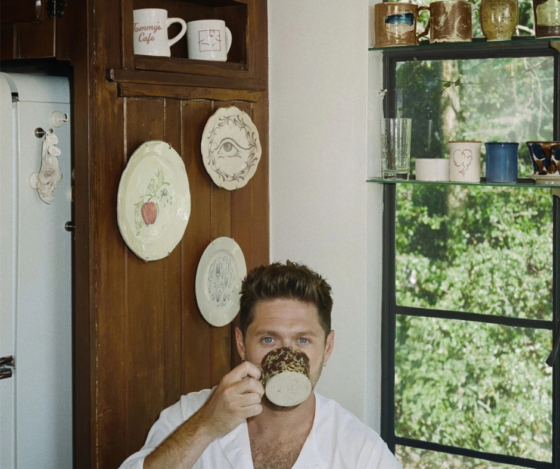
Dinner Party review: You walk into a room and it smells like expensive candles and guitar strings. That’s what listening to Niall Horan’s fourth album feels like. Dinner Party arrives on June 5th as a project that feels deliberately crafted for people who’ve grown tired of pop music feeling like a spreadsheet, all metrics and compression and nothing breathing underneath.
A Room Full of Candlelight (Dinner Party Review)
The story Horan tells is simple enough on the surface. He met his girlfriend Amelia at a dinner party. That night becomes the nucleus of an entire record about love, loss, getting older, and the way small moments can reshape your entire life. It’s not groundbreaking conceptually, but then again, neither was sitting in a room with a guitar. What matters is whether he makes you feel something, and for the most part, he does.
The Shift Begins (Dinner Party Review)
Opening with “Tastes So Good” immediately signals something has shifted. The production is sparse. His voice sits further forward in the mix than you’d expect. There’s breathing room here, the kind of negative space that modern pop has been actively avoiding for about a decade. Horan’s mentioned that he was listening to a lot of Radiohead while making this record, and you can feel it in the way he stretches his vowels, lets certain words hang in the air longer than feels natural. It’s not aggressive exactly, but it’s definitely more textured than anything he’s done solo before.
The Nucleus (Dinner Party Review)
“Dinner Party” itself is the moment where everything clicks. The title track plays almost like a memory being replayed. The lyrics are startlingly specific: knives and forks, 2 a.m. coffee, chandeliers casting light on the exact moment his life pivoted. If you’ve ever experienced that kind of instant recognition when you meet someone, you’ll feel seen here. The guitar is fingerpicked and real sounding, the kind of recording that makes you wonder if you’re listening to something someone made in their living room versus a studio in Los Angeles. That’s partly the point. Horan has been very deliberate about wanting this record to feel live, organic, less compressed than the polished pop machine that’s dominated the last few years.
Where It Settles (Dinner Party Review)
What comes after is a record that mostly delivers on that promise, though not without stumbles. “Better Man” is the ballad that justifies the whole Damien Rice worship. It’s vulnerable without feeling designed for vulnerability. The production lets the song sit with its own sadness instead of trying to amplify it with strings or synth swells. By the time you reach the chorus, you understand why Julian Bunetta and John Ryan pushed him toward writing something this exposed. This is a song about not being enough, and Horan doesn’t dress it up.
“Little More Time” shifts the tone slightly. It’s breezier, more conversational, built on the idea of wanting to freeze a moment with someone you love before everything moves on without you. There’s a melancholy running underneath all that ease, which is what makes it work. It would be simple to dismiss this as safe, and some will. But there’s actual craft in writing something that sounds this effortless.
The Drift (Dinner Party Review)
The middle section of the album settles into a register that occasionally feels a bit repetitive. “Monochromatic,” “She Gets It from Her Mother,” and “Flowers” all work in similar emotional lanes. They’re pleasant. They’re well made. But after the impact of the opening tracks, they feel like they’re trying to maintain something rather than push it forward. The “Flowers” callback to a fan-submitted lyric is charming in concept, but the song itself doesn’t do much with the idea. It’s the kind of track you don’t exactly skip, but you don’t linger on it either.
“Boys Are Fun” and “Fighting Over Nothing” pick things up slightly. The former has actual personality. There’s something flirty about it, something that remembers that Horan can be playful, that relationships aren’t just about slow-motion vulnerability. By the time you hit the back half, it feels like the record is reminding you that this isn’t a misery memoir. There are actual moments of lightness and connection here, not just cinematically lit sadness.
“Pretty” is another one that sits in that middle ground. It’s a love song, straightforward and earnest, but nothing about it particularly lingers. “Die If I Don’t” feels like it’s trying to be a album closer but it’s not, which creates an odd momentum shift.
The Reckoning (Dinner Party Review)
Then you hit “End of an Era” and everything else falls away.
Horan’s mentioned that this song was originally written as a transition piece, but after Liam Payne’s death in October, they rewrote it. You can feel that urgency in the lyrics. “We had it, pure magic” at the beginning feels like it could be about anything, but by the time you reach “I couldn’t tell you goodbye,” the context becomes impossible to ignore. It’s a tribute to a bandmate, a friend, someone he spent his formative years with. But it’s also universal in a way that great songs are. It’s about anyone you didn’t get to say goodbye to, anyone taken too soon, any era that ends without warning.
It would be easy to dismiss this as an emotionally manipulative closer, using real grief to manufacture impact. But Bunetta’s quote about rewriting it multiple times trying to get the feeling right matters. The song doesn’t feel slapped together. It feels considered, respectful, genuinely mournful without wallowing.
Looking Back (Dinner Party Review)
The whole record lands differently once you’ve sat with this ending. Looking back, Dinner Party isn’t just about the euphoria of meeting someone you love. It’s about the fragility of connection, the way any moment could be the last one, the reason you have to hold the people you care about tightly even when holding on is terrifying.
The Warmth (Dinner Party Review)
Horan’s voice throughout is warmer and more present than it’s been in his solo work. He’s not trying to prove anything technically. There’s no oversinging. The production philosophy of keeping things live and immediate means his imperfections land as texture rather than flaws. That rasp in his voice when he pushes, the slight cracks that happen in takes that would normally get fixed, they’re all part of the record’s DNA.
The Bigger Picture (Dinner Party Review)
Is this the record that changes the conversation about Niall Horan? Probably not. He’s never been someone the internet fights about in the way they do Harry or Zayn. But that might be exactly why Dinner Party works as well as it does. There’s no pressure here, no need to prove he’s evolved or changed everything. He’s just made a genuinely warm, thought through collection of songs about the things that matter: love, loss, the people we meet by accident who change everything, the people we lose before we get to say goodbye.
It’s a record designed for late nights and repeat listens, the kind of album that gets better the more you understand what it’s actually about. That’s not a small thing in 2026, when albums are often designed to be consumed in singles and forget the rest. Dinner Party asks you to sit with it, to let the songs accumulate and build into something bigger than any individual moment.
The biggest risk Horan takes here is that he doesn’t take any risks at all. He doesn’t try to shock you or reinvent himself or chase whatever trend is happening. He just makes an honest record with people he trusts, about the life he’s actually living. In a landscape where most pop artists are terrified of being left behind, that kind of confidence in understatement is almost radical.
What It Becomes (Dinner Party Review)
By the time you reach the end, you understand that Dinner Party isn’t really a love album, even though it starts that way. It’s an album about impermanence, about holding on to moments because you never know which ones will be taken away. The dinner party where Niall met Amelia becomes a metaphor for all of it: the good things, the people, the versions of ourselves we leave behind, the ones we’re still fighting to keep.
It’s not perfect. There are songs here that drift without fully landing. The middle section could have benefited from some editing. But it’s focused and it’s genuine, and that’s increasingly rare. Dinner Party is the kind of record you put on and feel like someone’s finally remembering that pop music can be intimate, that songs don’t need to be designed for stadium echoes to matter.
In the context of his solo career, this is Horan at his most comfortable. He’s stopped trying to prove he was worth something outside the band, and started making music that matters because he needs to make it. Everything else flows from there.
Listen to “Dinner Party” by Niall Horan (Dinner Party Review)

- Mystery Jets“Flea Joint” Review - July 23, 2026
- Why Some Fans Don’t Want New Oasis Music - July 21, 2026
- Brandon Flowers “THRASHER” Review - July 14, 2026

